
Category: One Focus Blog

Forgetting the Cross

Some years back, my husband was a pastor in far west Texas. He led our church to hold an annual evangelistic crusade in a mountain amphitheater. Although it was difficult in that city to get new people to come to the church building, in this beautiful outdoor setting, the attendance was always very good.

A large cross, illumined by spotlights, was placed strategically behind the stage area. No one attending the services could miss seeing the old rugged cross on the hill. The cross was central in the preaching and the music. Many people were saved as a result of the crusades.

Set up and tear down of the equipment was an all day affair, involving many people and much labor. One year, when things that were to be carried back to the church had all been loaded on the trucks and the tear down team was ready to drive away, my husband heard one of the clean up crew for the amphitheater cry out, “Hey, mister, you forgot your cross!” Sure enough, the cross still stood on that hill, alone, and forgotten. My husband has never forgotten the implications of that oversight, nor have I.

For many years, I have observed preachers and churches who have forgotten the cross. No one seems to be offended with stories about Jesus, the nativity, the miracles and the parables. However, when the whole gospel is preached and the cross is included, there is a different reaction, sometimes a violent one. Preachers are tempted to leave the cross out of the gospel in order to reach the crowds. People would rather hear a motivational message loosely based on scripture than the whole gospel, with the terrible reality that it was our sin that nailed the Son of God to the cross.

The sweet story of the nativity has to include the horrors of the cross and the glory of the resurrection. Jesus paid for the sins of mankind on His cross. After His resurrection, He sat down at the right hand of the Father, His mission complete. The whole story of Jesus must include the cross and the resurrection.
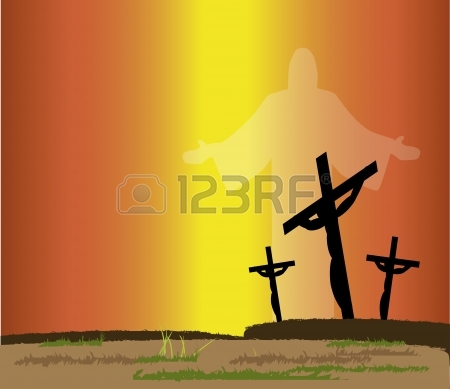
25019718-resurrection-christ-easterDon’t forget the cross!

Christ died for our sins, just as the Scriptures said. He was buried, and he was raised from the dead on the third day, just as the Scriptures said…And if Christ has not been raised, then your faith is useless and you are still guilty of your sins. In that case, all who have died believing in Christ are lost! And if our hope in Christ is only for this life, we are more to be pitied than anyone in the world (1 Corinthians 15:3-4,17-19 NLT).

Adaptation and Identification

Traveling as much as I do is an exercise in adaptation. My husband and I stay overseas often for an extended period of time – several weeks or months.

We don’t stay in tourist areas, but live where locals live. I prefer it. Sometimes there is a lot of difference between the two. I get a much better perspective.

Although my primary frame of reference is American, I am very happy to say that my frame has grown and keeps growing. Adaptation to other cultures has given me a better and broader worldview.

Since we do live among the people for extended periods, there are many things I need to discover about each new location. Will I be close to public transportation? Are schedules reliable? Do many people speak English? Can I safely walk in the neighborhoods? Are dogs behind fences or are they allowed to roam the streets? What is expected of pedestrians?

Being exposed to different cultures leads to identification with the local people. There are times I have an “aha” moment thinking, “That’s why they do what they do!” Discoveries first hand make a bigger impression than reading about the culture or hearing someone else describe their experiences.

The most surprising thing to me has been reverse culture shock upon returning to America. Things I have gotten used to overseas – great public transportation, the abundance of woods with hiking trails and cheese I can afford – I often miss when I go home. Most of all I miss my new friends.

I am often eager to return to places I have been to see my friends, but I also miss my family, home and friends in the U.S. when I am overseas.  I often wish I could be in more than one place at a time.

Jesus chose to leave Heaven and adapt to the limitations on earth for our sakes. He identified with us. I don’t have to wonder if He misses His friends because He, unlike us, can be in both places at once. His Spirit is still with us.

And the Word became flesh and dwelt among us… (John 1:14a).

Transcending the Language Barrier

God has a great sense of humor. I am never at a loss for words – unless I can’t speak the language. In ministry, my husband and I travel all over the world. I am more often than not in a situation where I cannot speak the language.

We minister often in Poland. I don’t speak Polish. We go frequently to Spanish speaking countries. I can’t speak Spanish. Although we lived in Germany, I only learned a small amount of German. We spent a year ministering in France. I don’t speak French. We have traveled to Austria, Portugal, Italy, Ukraine, China and countries in the Middle East where English is not the national language. Not once could I do what I do in America – meet people on the streets and carry on a conversation.
Although I would very much like to get to know people on these trips, I am handicapped because I can’t communicate in their mother tongue. I often give locals who want to practice their English a workout, but I would rather speak to them in their own language. I wish I had a gift for languages. I don’t.
The common denominator in all these places is that someone I work with speaks English. I must rely on her for all the information about the area, how to conduct myself, how to shop and use the transportation system, etc. For those dear friends who are gifted in multiple languages, I pray that God will especially bless them for their service. I couldn’t do what I do without them.

I am able, however, many times to get my point across without using the local language.  There are a few things that transcend the language barrier.

In a special service in Poland, for instance, I had a meaningful worship experience even though I didn’t understand a word that was spoken. What I did understand, through song, message, testimonies and tears, was a love for God and a desire to praise Him. The language barrier was transcended by the common bond I have with the family of God. His Spirit was with us all.

Music is a special language all of itself. Familiar tunes to hymns and choruses I hear in church services around the world make me feel at home and connected with the other worshippers.

I try to learn a few phrases in each language, especially “Good day” and “thank you.” I find myself repeating those expressions over and over again, sometimes appropriately, sometimes not. My mispronunciations are received with good-natured laughter.

Everyone is complimented when you at least try to greet them in their mother tongue. Occasionally, I will learn an additional phrase. In China, I also learned the expression “God bless you.” I will never forget the smiles on the faces of some of my new friends as I left and said, “God bless you” in Chinese.

Although I must be careful about how I do this, sometimes charades works. Resulting in lots of laughter, physical demonstrations can communicate.

Intentional presence makes a statement. Even among English speakers, many times, just “being there” is the preferred message of the moment. Sometimes there is nothing that can be said to remedy a situation. Presence can transcend the language barrier. Facial expressions and mere presence can communicate, “I’m here because I care.”

Expressions of greetings are different in every country. They vary from a handshake to a one cheek kiss to a two cheek kiss to a bow to a big hug. Even though I try to find out what is practiced locally, sometimes I just do what is natural for me and give a big hug. I have yet to have someone chide me for this even when it is not common. Especially when I greet another woman, our eyes meet and there is a big returning smile, when I give her a hug, she returns it with gusto. It always seems to communicate.

Although I know my handicap will not be a problem in heaven, my attempts to communicate here result in a lot of laughter. God does have a sense of humor.

There is neither Jew nor Greek, there is neither slave nor free, there is neither male nor female; for you are all one in Christ Jesus (Galatians 3:28)

The Forest and the Trees: My Perspective, God’s Perspective

One of my favorite things to do is take a walk in a forest.  I love trees.  Being close to many different types of trees helps me notice certain features about them: their size and shape as well as the particular characteristics of their leaves. Especially during fall, this is an exercise in delight. The leaves changing colors and floating to the ground right in front of me is like watching a painting in progress – a work of art only God can create.

Taking note of the intricate design of leaves, the route of gnarly tree roots and various designs of tree bark is something that can only be done close at hand. Once I walked through a small area of a forest that had been harvested. Before reaching the site, it appeared there were no trees at all in that spot. When I got close, I found the area had been replanted. Small trees would someday grow tall, house birds, and provide shade for small animals.

Viewing the forest from a distance, such as from above in an airplane or from a car passing by, would render these details inaccessible. That view is also beneficial, however, as it gives a different and important perspective. Each tree in a forest is part of the whole. Without individual trees, the forest would not exist. Together, they are something more than they are alone.

I am often reminded that God’s perspective includes both the forest and the trees.  While my perspective is often determined by my experience, a point in time or my location, I know God does not have those limitations. He truly does have the big picture.  He can focus on the minute details of the tree and see the forest as a whole at the same time. The smallest detail is a part of His plan. His perspective includes the details of my life along with everyone else’s.

Knowing God created the tree and the forest and sees intricate details of one tree as well as the entire forest at the same time helps me cope with unknown elements of my future. No detail in my life is inconsequential in His plan. The small things in life are significant because they are part of the whole.

The trees of the Lord are full of sap, the cedars of Lebanon which He planted, where the birds make their nests; the stork has her home in the fir trees…O Lord, how manifold are Your works! In wisdom You have made them all. The earth is full of Your possessions (Psalm 104:16, 17, 24).

Connecting the Dots: An Exercise in Understanding Life

As a child, I worked with books containing several different kinds of exercises: coloring pages, mazes, crossword puzzles and connect the dots.  My favorite was connecting the dots. On the most complex pages, you could not tell what the picture was until you had completed the process of connecting dot number one with dot number two, etc. until the last dot had been connected. The resulting picture was in the background. The creator of the page had it in mind before he removed the lines that connected each dot. His aim was for the picture to be discovered after the dots were connected.

I remember some of the “aha” moments I had when I had finally connected enough dots to see what the picture was going to be, but finished the exercise anyway because I wanted to see the completed picture. I might then color it, but I often left it just as it was when the last dot had been connected because I had seen all I needed to see. The delight was in finding the hidden picture.

Steve Jobs, co-founder of Apple Inc., gave a speech to the graduating class at Stanford University in June 2005. His first point caught my attention. It was about connecting the dots.

Steve’s story of connecting the dots had to do with his own life. He was where he was in business because of a series of events that happened, some beyond his control: circumstances surrounding his adoption as a child, his quitting college and deciding to pursue his personal interests, his being fired at the company he started, etc. All this led him to a point where he was able to accomplish certain other things. Connecting those dots in retrospect helped him see the fuller picture of why he was able to do the things he did.

He said connecting the dots is only possible when you look back on life, but when you do connect them, situations that at first seemed to be negative can sometimes lead to a positive outcome.

Connecting the dots is my favorite way to study the Bible. The many ways to study God’s word, such as verse-by-verse exposition, character analysis, theme, book study, etc., all have great value. The important thing is to spend time reading His word, asking Him to reveal His truth to you, and making the application when it has been revealed.

Often, when I am reading God’s word, I notice the repetition of a word or a concept and start connecting those dots. For instance, when I was reading through the letters the apostle Paul wrote, I started noticing similarities in his prayers. The result of that study was a book: The Prayer Driven Life. Paul’s prayers included prayers of blessings, thanksgiving for the saints, praise and thanksgiving to God, petitions to God on behalf of the saints, and benedictions. I never would have discovered those groupings of prayers had I not connected the dots that flowed from Romans through Philemon.

Connecting the dots of God’s word is exciting to me.  Many of my Bible studies have started that way. Connecting the dots between His word, history and current events makes sense. Reading the Bible is as currently relevant as reading today’s newspaper. Connecting the dots between His word and the events of life takes the focus off myself and onto His plan.

Steve Jobs was partially right. We connect the dots in our own lives by looking backwards. Christians, however, have an advantage: one of faith and trust in God who has a plan. The resulting picture of our completed lives was already in our Creator’s mind before we were ever born. His plan connects the dots of our past and present with our future. As I watch the picture He created unfold, I know I can trust the Creator to do all that is right.

My frame was not hidden from You, when I was made in secret, and skillfully wrought in the lowest parts of the earth. Your eyes saw my substance, being yet unformed. And in Your book they all were written, the days fashioned for me, when as yet there were none of them (Psalm 139:15-16).

Playtime, Love and You

Being a grandmother brings back memories of time spent with my own sons when they were preschoolers. Then, as now, time was more plentiful than money; however, being forced to be creative in our playtime was, and still is, a good thing. Especially with an unfavorable economic situation, parents and grandparents are sharing tips that have worked for them as they help their children enjoy life without spending much money.

Children love to work with their hands. Give a child time to play in a sand pile with old margarine tubs, kitchen utensils (sifters, spoons, etc.) and he can create anything – forts, farms, trains, churches, or just plain mud pies.

When my children were small, unless we had to go somewhere, I didn’t worry about them getting dirty. On nice warm days, they could water the dirt and have extra fun with mud. This kind of play is not only fun; it also develops small muscle coordination and imagination. Playing outside makes them more aware of all the good things God has created for them to enjoy.

Just as children love to play in dirt and sand, they enjoy play dough or clay. I found homemade play dough lasted much longer than the purchased kind. They simply used cookie cutters and plastic items with the play dough.

A lot of throw away items hold charm for a child: old clothes, bits of wood (with no splinters), old wooden spools, spray can tops, plastic bottles (not pill bottles), and boxes of all sizes. Uses are limited only to the imagination of the child. Children love to create something of their own. One of my grandsons is especially good at making something out of practically nothing.  I am always looking forward to seeing what he has created.

Most important of all is time a parent or grandparent spends playing with his child. What a child wants and needs is the love and companionship of his parents. I am so proud of my sons and their wives as they are taking advantage of every minute they have with their young children, recognizing that time with them is precious.

Grandchildren are the crowning glory of the aged; parents are the pride of their children (Proverbs 17:6 NLT).

The Miracle of Adoption

In September 2008, my son and his wife felt God calling them to adopt a child – preferably a girl.  They have two terrific natural born sons, so they are in the minority of people who choose to adopt. Since most couples adopt because they can’t have children any other way, my son and his wife did not request a newborn. Wanting to keep the existing birth order in their family, they did ask for a child under three.

Anyone who has been through an adoption process or is related to someone who has knows that adoptions are expensive and enormously time consuming. Deciding to adopt a child makes a bold statement. Parents (and in some cases, siblings) are willing to pay the price to adopt a child.

In their case, two adoption agencies (the first one didn’t work out), much money and three years later, the day finally arrived. With all the hiccups in the process, one blog entry of my daughter-in-law’s was “God has a plan, God has a plan, God has a plan.”  Today, we know what that plan was.

In September 2008 Olivia’s birth mother was in her first trimester. After giving birth to Olivia seven months later (March 2009), she left her on a doorstep where she was found and taken to a foster home.

The referral from the agency came just after Olivia’s second birthday in March 2011. As soon as we all saw her picture, we knew why God allowed the delay. Everyone instantly knew that Olivia belonged to our family. She was not even born when they started the process with the first agency.

Olivia will know she is adopted. She will know that she is loved and wanted. She will be told that she was longed for, chosen and considered worth any price that had to be paid so she could be part of the family.

God wants, longs for and choses to adopt those who accept the sacrificial gift offered by Jesus Christ. He paid the highest price for each child of His: the life and death of His only begotten Son.

To all who believed him and accepted him, he gave the right to become children of God…God decided in advance to adopt us into his own family by bringing us to himself through Jesus Christ. This is what he wanted to do, and it gave him great pleasure (John 1:12, Ephesians 1:5 NLT).

Some of the Richest People I Know Don’t Have Any Money

Since I have the privilege of teaching Bible internationally, my friendship circles are as big as the globe. I have been incredibly enriched by getting to know so many people from a variety of different backgrounds and cultures.  I have been exposed to them in their churches and their homes and have been the recipient of their amazing hospitality.

Some of the richest people I know don’t have any money. “Poor me” is not in their vocabulary. In spite of extremely limited material resources, they do not feel deprived. They share freely – many times giving the best of what they have to their guests.

Their joy does not come in the possession of things, but in the contentment of a life that is counting for something far greater than anything material. They love God. They love life. They love people.

Like Jesus, who had nowhere to lay his head, they understand all the resources of heaven are at their disposal. Their measurements of riches, however, are not monetary.

They are rich in:

  • loyalty, love and laughter
  • honor, hope and humility
  • generosity, grace and genuineness
  • patience, peace and purity
  • justice and joy
  • faith

Some of the richest people I know don’t have any money. They have Jesus.

I know how to be abased, and I know how to abound. Everywhere and in all things I have learned both to be full and to be hungry, both to abound and to suffer need. I can do all things through Christ who strengthens me (Philippians 4:12-13).

Preparation, Hope and Predicting the Future

None of us can predict the future. Or can we? Like the rest of my country, I watched and prayed when Hurricane Irene made her way along the eastern coast of America. Weather experts noted the historic nature of this storm and the impact it could have and eventually did have on those in her path.

Even those not directly affected by the storm were aware of the havoc she caused. Air travel was interrupted all over the nation proving to bring about yet higher prices for airline travel which does impact the rest of us.

There is a ripple effect on an entire nation because of a major storm – just as there is a ripple effect from a dismal economic crisis.

Several times during the week Hurricane Irene showed up, I heard the phrase, “Prepare for the worst. Hope for the best.” The advice was directed toward those who would potentially be in the path of Irene’s fury. With all the technology available to experts, their best predictions were still an educated guess. Some of them, when questioned about what would happen, said, “Give me 24 hours, then I can tell you.”

There were, sadly, many who lost loved ones and property because of this storm. Losses would have been greater still, though, had people not heeded the advice to prepare, evacuate or stay in during the storm. The capabilities of prediction today are so much greater than they were in times past that saving lives and protecting property is more possible than it used to be.

Prepare for the worst, hope for the best could also be applied to the economic situation. Experts in every financial field have been asked to make predictions about unemployment, home foreclosures, reviving retail figures, the stock market, the value of the dollar and everything else related to the crisis. Expert opinions run from dismally pessimistic to cautiously optimistic.

No one really knows for sure. Prepare for the worst. Hope for the best.

We cannot live effectively with blinders on. We must be aware of the big picture. At any given moment, circumstances beyond our control can change our lives. Prepare and hope is good advice.

As a Christian, I believe I can prepare for the best and hope for the best. The best in life is knowing the love of Jesus. My hope is in Christ, my Savior. That hope is not a “hope so,” but a solid expectation that His promises are true.

Preparing for the best, to me, involves being ready to greet Him either when I meet Him in my death or when He comes to receive His own. In that sense, I can predict the future.  I know without a doubt the best is yet to come.

No, in all these things we are more than conquerors through him who loved us. For I am persuaded that neither death nor life, nor angels nor principalities nor powers, nor things present nor things to come, nor height nor depth, nor any other created thing, shall be able to separate us from the love of God which is in Christ Jesus our Lord (Romans 8:37

The Value of Encouragement

I attended nine schools before junior high school. All of those schools and teachers are a little fuzzy in my memory, with the exception of one teacher.

In seventh grade, my English teacher asked me to stay after school. After reading essays and stories I had written, she encouraged me to write more. Her name is the only teacher’s name I remember from all those years of attending different schools. I have never forgotten her or her encouragement.

As an adult, I have enjoyed writing and teaching Bible studies in churches and conference settings. Through my husband’s encouragement, I have written books, established websites and am always working on other writing projects.

I am convinced none of this would have taken place without encouragement. I have my husband to thank as well as friends and family who encourage me to continue. Those who encourage others have a vital part in their work.

I am not alone in this. Most of us wither a little when someone discourages us. All of us thrive on the encouragement of those we know and love. Recently I read an interview with a best selling author. She said the most encouraging words she had received were from her eight year old grandson who said, “Grandma, you are a good writer.”

Never underestimate the value of encouragement.

God’s word can encourage you each time you read it.  He also wants His children to strengthen and encourage one another.

So encourage each other and build each other up, just as you are already doing (1 Thessalonians 5:11 NLT).