Month: November 2012

The Painful Path to Empathy

A Christmas Carol was the first of five Christmas books written by Charles Dickens. The Haunted Man and the Ghost’s Bargain, a lesser-known work, was the last of that series.

300px-Hauntedman_front_1848The Haunted Man, Professor Redlaw, is haunted by his sorrowful past. The only redeeming feature of his youth was a sister who died. The memories are continually brought before him by a Phantom who offers him relief. When he allowed the Spectre to cancel his remembrances, Redlaw made a surprising discovery. Not only did his memory of sorrow and wrong leave him, so did any element of softness and caring for others. Even worse, that gift was passed on to others around him with similar consequences.

Unaffected by this desire to forget sorrow is Milly Swidger who had lost her only child. A sweet simple woman, Milly tells her husband, “I am happy in the recollection of it…All through life, it seems by me, to tell me something. For poor neglected children, my little child pleads as if it were alive, and had a voice I knew, with which to speak to me. When I hear of youth in suffering or shame, I think that my child might have come to that, perhaps, and that God took it from me in His mercy…that even when my little child was born and dead but a few days, and I was weak and sorrowful, and could not help grieving a little, the thought arose, that if I tried to lead a good life, I should meet in Heaven a bright creature, who would call me, Mother!”

Observing her unusual application of loss, Redlaw comes to himself, praying, “O Thou who through the teaching of pure love, hast graciously restored me to the memory which was the memory of Christ upon the Cross, and of all the good who perished in His cause, receive my thanks, and bless her!”

At the end of the story, Dickens suggests, “that the Ghost was but the representation of his gloomy thoughts, and Milly the embodiment of his better wisdom.”

I have seen Dickens’ moral carried out in everyday life. Many kindhearted people attempt to sympathize with those in sorrow and pain, but it is those with similar experiences who make the largest contributions to healing. A mother who has had a stillborn child can comfort another mother like no one else can. Military families who have sent their loved ones to war can understand each other’s needs – often knowing what to do without being asked. A parent who has a wayward child can sit with another parent with a unique bonding and empathy. Those who have lost their jobs in an economic downturn are able to help each other in a special way. Homeless people can band together to become a community. And on it goes. People who have “been there, done that” are those who understand the most.

Christians have a Lord who empathizes with our sorrows and pains. His suffering was a choice – so we knew that He could understand, empathize and give guidance and comfort when comfort is needed.

Praise be to the God and Father of our Lord Jesus Christ, the Father of compassion and the God of all comfort, who comforts us in all our troubles, so that we can comfort those in any trouble with the comfort we ourselves have received from God. For just as the sufferings of Christ flow over into our lives, so also through Christ our comfort overflows (2 Corinthians 1:3-5 NIV).

OJT Parenting

Skills for two of the most important roles in life are developed after we have already entered the relationship. On-the-job training is the norm for both marriage and parenting.

Some of us had good examples of parenting modeled before us. Others had terrible models. I had a mixture. When I became a parent, I found the overwhelming responsibility overridden by pure joy.

How many of us felt we could not measure up to the standards set by our parents – we were never good enough at music, art or sports? Do negative comments keep popping up in your mind? That is preventable in your relationship with your own children. Don’t say anything untrue, but every positive action can prompt a compliment from you. “I really enjoyed hearing you practice the piano,” is better than “You played that piece perfectly.”

US_Navy_090722-N-8467N-006_Culinary_Specialist_1st_Class_Joseph_Appold_hugs_his_1-year-old_son_Kameron_upon_the_return_of_the_Virginia-class_attack_submarine_USS_New_Hampshire_(SSN_778)_to_Submarine_Base_New_LondonRaising children is a bit like growing an orchid. One expert said growing an orchid requires experience, education and to be preventive in respect to problems. In raising children, add a great deal of nurturing, time and love.

As a Christian, I tried to find guidelines given in scripture. These are some of the ideas that came out of that study.

Life is tough. Children need someone to lean on, to count on. Children need to learn how to handle difficulties while at home. It prepares them to handle the challenges of the outside world.

Although you should be the primary teacher in your child’s life, many others are also training him: teachers, neighbors, people at church. Some reinforce your training. Some do not. It is easy for a child to be confused. Lead by example and your child will see the difference. If you tell your child not to lie, but you lie, he will not trust you nor will you be able to adequately comfort him when he encounters trials in his life. It is important that you let your child know you also need God and His comfort – you are a sinner and you also need His guidance.

Accept your child for who he is. His personality may be the opposite of yours. God gave your child his personality, his temperament. Your job is to help him build his character. He needs to know you respect him.

A child who knows he is loved and accepted will be able to take the discipline necessary to mold his character. Reinforcing positive behavior often prevents the need for discipline. If he makes his bed (even if it is not as you would have done), take note of it. Don’t remake the bed. If he is careful to watch after a sibling, say something about it. Praise goes a long way with a child.

The Bible is life’s operating manual and a parenting guidebook. Humans are tri-dimensional: physical, mental, spiritual. Some parents make sure their children are nourished physically, send them to school to get education, but leave the spiritual until they can make the decision for themselves. God makes it clear He expects parents to be in charge of their spiritual development. There is no greater calling.

Each generation can make known Your faithfulness to the next (Isaiah 38:19). Children are a heritage from the Lord, the fruit of the womb is a reward (Psalm 127:3).

Logistics and Progress in Poland

Logistics in Poland is very well thought out. On a road trip from Lwówek Śląski (a small town close to Germany on Poland’s western border) to Warsaw, Poland, I passed through the center of Poland and saw a landscape filled with warehouses – distribution centers for many retail stores. 

Central Poland is home to millions of meters of warehouse space. Major cities in Poland plan to add more warehouses as their economy continues to improve.

Un-polandAccording to an August 2012 issue of The Warsaw Voice, by 2020 Poland will become the main logistics center in Europe. Colliers International, a real estate services company who conducted the research, expects distribution centers to grow the fastest in Gdańsk/Gdynia, Łódź, Katowice and Wrocław.

Twice as much warehouse space was constructed in the first half of 2012 as the year before with the largest amount of new space built in the vicinity of Warsaw. The midwestern city of Poznań, central Poland and Upper Silesia also gained a significant amount of warehouse space.

I have been to most of the cities mentioned in the article I read. I love Poland and the Polish people. Some of my best friends live there.

It wasn’t too long ago shelves were empty and goods were difficult to obtain in this country. I am thrilled to see progress come to Poland. To me, these warehouses do not mar the beautiful countryside as they are strategically placed simply to make it easier to deliver goods throughout the country.

As a Christian, I know where everything I need is located. Every material, physical or spiritual need that I have comes from one source.


Every good and perfect gift is from above…(James 1:17). Do not worry then, saying, ‘What will we eat?’ or ‘What will we drink?’ or ‘What will we wear for clothing?’… for your heavenly Father knows that you need all these things. But seek first His kingdom and His righteousness and all these things will be added to you (Matthew 6:31-33).

The Joy of Food, Fellowship and Family

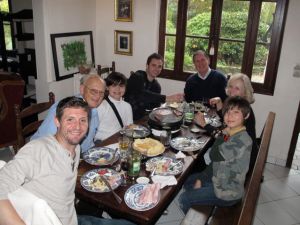
There’s something about sitting together around a table full of food that invites conversation – especially with family. When our sons got married, I made a family recipe book for my new daughters. It occurred to me that many of our best memories were around meals celebrating Christmas, Thanksgiving, birthdays or traditions we had created for meals on Friday nights, Saturday mornings or Sunday after church. Those memories were of great joy when we were all gathered around the table.

Now the joy is magnified because the family has grown. On rare occasions when we have mealtimes together again, it is with grandchildren and all the delightful contributions they make to the conversations.

This last week was another reminder of this truth. I attended two fellowship meals with our church family here in France. There was a covered dish luncheon on Sunday after church. So much good food and time to visit with friends around the table is a great treat. On normal Sundays, people have to be out and about and visiting time is limited. On covered dish Sundays, people make an effort to stick around, visit and enjoy a meal together.On Tuesdy, our ladies Bible study group got together at a member’s lovely home for lunch. Again, there was time to discover more information about my sisters in Christ. People I had grown to love I love even more because I know them better now – they shared their testimonies and experiences with the Lord. It was truly a joyful time.

Jesus had similar experiences. He never was in a hurry, but it was at mealtimes we see him having the luxury of sharing life with those He loved. He spent time in fellowship and meals with His friends Mary, Martha and Lazarus. Those were times of rest and restoration for Him, just as times of food and fellowship with family are for us.

There was one very special meal where Jesus was able to have a time of very needed fellowship. It was just before His betrayal and crucifixion. In the upper room, after Judas left, Jesus had an opportunity to share some special revelations of Himself to elIMG_5919even of His closest friends. He had come so they might be adopted into His family. As He left His brothers with incredible words of encouragement and promise, He told them that His intended purpose for doing so was that they might share in His joy.
Food, fellowship and family are perfect settings for experiences of joy.


These things I have spoken to you, that My joy may remain in you, and that your joy may be full (John 15:11). But now I come to You, and these things I speak in the world, that they may have My joy fulfilled in themselves (John 17:13).

Families Adapting to a Changing World

Few families live in close proximity in America any more. In many other countries, the culture is still like America used to be – families and extended families are close enough to help out with many different aspects of family life. In America, that advantage has pretty much ceased to exist.

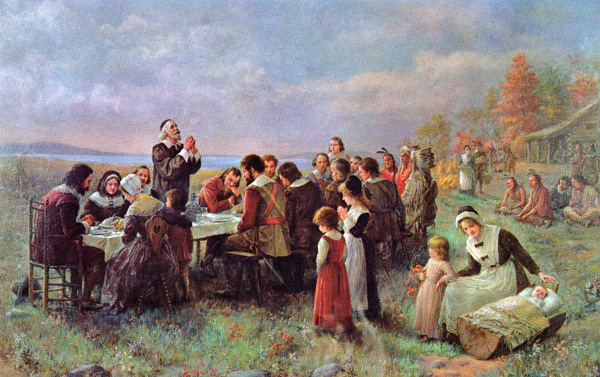
free-thanksgiving-pictures-2Think of the difference it has made in our society because most families do not live close to one another. Before, childcare was not an issue because grandparents or aunts and uncles lived down the street or in some cases in the same house. The sting of unemployment was relieved somewhat because family members shared what they had with each other. Planning for retirement meant moving from the downstairs portion of the house to the upstairs portion of the house so that the family members with small children had the larger living area. Traveling long distances for holidays was unknown because it was not necessary.

Rural living has largely been replaced by dwelling in large concrete cities. Instead of face-to-face conversations with family, friends and neighbors, people communicate by email and texting – often with their eyes glued to a small screen in their hand instead of a face of flesh before them.

My family is spread out all over the world. That is the way it is. I continue to long for the closeness of a loved one, catching a smile unnoticed or observing a loved one in a moment of time that cannot be captured by camera or video.

Since this is a present reality, I am thankful for gifts of modern technology that remind me of the personal touch of yesterday. I was able to experience this on an American holiday – even though my husband and I were home alone. Since my immediate family has a similar free internet service that enables us to call each other using microphones on our computers and see each other utilizing webcams, we were able to talk for several hours to family members – first with one son who was out of the country and then with our other son and his family while we were all preparing our meals. It was not exactly the same as having family come home for the holidays, but on that day, it was as close as we could get.

I am grateful as a child of God, I don’t have to wait for a phone call or a visit to be able to talk to Him. I don’t have to check a world clock for the time difference between where He is and where I am. I don’t have to worry about whether He is busy or He can’t answer my call. I can speak to Him at any time and He will hear me. His Spirit, who abides in me, can communicate immediately with me. He is always near and available, ready and delighted to hear from one of His children.

Jesus answered and said to him, “If anyone loves Me, he will keep My word; and My Father will love him, and we will come to him and make Our abode with him (John 14:23). By this we know that we abide in Him and He in us, because He has given us of His Spirit (1 John 4:13 NASB).

Really Seeing the World Around You

I subscribe to a writer’s magazine and follow several blogs submitted by their staff. The motivational tips on writing, information on the latest developments in the publishing industry, what kind of writing is currently attractive to readers, etc. keep me informed in an ever changing world. There is practically no way to keep up on all the pertinent information without help.

Theirs is not the only source I consult. I purchase books on writing, read what others write, fiction and nonfiction, and notice blogs where successful authors share their secrets and hints at sticking with their writing, no matter what. Some authors share how they conquer writer’s block. Others give helpful knowledge about grammar, word usage, punctuation and formatting.

Recently I read a guest post by Kevin Kaiser on Writer’s Digest entitled “What Bestselling Writers Do Differently Than Everyone Else.” Of his four points, it was the first one that caught my attention. Kevin said, “They are intent on seeing the world. Most of humanity hurries through the day in a fog, looking only where they need to in order to survive…But prolific and successful artists are students of the world around them. They pay attention because stories worth capturing are happening all the time right next to them. They just see it where others don’t. Eyes that look are common, eyes that see are rare.”

Kevin’s definition of an artist is “anyone who creates something that enriches the lives of others, whether that’s leading a vibrant organization, writing a book or singing a song.”

US_Navy_090722-N-8467N-006_Culinary_Specialist_1st_Class_Joseph_Appold_hugs_his_1-year-old_son_Kameron_upon_the_return_of_the_Virginia-class_attack_submarine_USS_New_Hampshire_(SSN_778)_to_Submarine_Base_New_LondonI think Kevin has captured the essence of a rich life – no matter what your occupation is. For instance, I heard an extraordinary speech given to military cadets. The speaker showed pictures of men and women he had worked with – some who had given their lives for our country. Along with the pictures, he told their stories. His speech was so moving and inspiring because he actually saw the men and women who served under him. He paid attention to them. Kevin said, “Eyes that see are rare.” This man’s eyes were definitely in that category. Anyone serving in his unit would know that he was not just a number or part of a unit, but that he had value.

At one point, Jesus’ disciples asked Him why He talked to the people in parables. In His reply to them, He said that He spoke in parables because “while seeing they do not see, and while hearing they do not hear, nor do they understand.” Kevin Kaiser may not have realized his observation “most of humanity hurries through the day in a fog” had spiritual implications, but it does. He was right. “Eyes that look are common, eyes that see are rare.”
Blessed are your eyes, because they see; and your ears, because they hear (Matthew 13:16).

Ten Talent Men

Immediately the one who had received the five talents went and traded with them, and gained five more talents…. Now after a long time the master of those slaves came and settled accounts with them (Matthew 25:16, 19 NAS).

The familiar parable of the talents is a tale of three men. The last man buried the one talent he was given. What the Lord gave him was never used at all – a sad story of a wasted life. God was not glorified. The man’s inaction led to condemnation from Him.

The first two men were both commended when they increased their talents. The master’s reply was exactly the same to both men. No matter how many gifts the Father gives His children, if they use them well, He will be pleased. The emphasis is not on the number of gifts, but on the heart of the receiver. A grateful and willing servant will be productive and give something back to God – glorifying Him with his actions and receiving a blessing as he does.

Fortunately, many Christians are very careful not only to use the gifts God has given them, but increase them as well. This devotional is about two of those men. They were given at least five talents each. In gaining five more, they became ten talent men.

My husband’s father has already entered the presence of the Lord. I believe that when he did, he was greeted with, “Well done, good and faithful slave. You were faithful with a few things, I will put you in charge of many things; enter into the joy of your master” (Matthew 25:21).

Pop could and would fix anything, not only in his own house, but also for anyone else who needed something done. He worked hard all his life to provide for his family. After retirement, he worked as a volunteer helping build and maintain churches, campgrounds and renovating widow’s homes.

Without complaint, he cared for Mom as she suffered with Alzheimer’s. Even after she began ill, he continued his volunteer work – always taking her with him, checking on her in the process. His pastor recounted that when there was work to be done at the church, the foreman would assign something to Pop, turn around in a few minutes to see him behind him, and would ask him if he needed help with the assignment. His answer was always, “No, I’m finished. What else do you have for me to do?”

The other ten talent man is a longtime friend. Having faithfully served as a foreign missionary, he continued to work in the church after he retired. With a goal of learning something new every year, he acquired new skills. He built an elevated garden with an inbuilt sprinkler system; learned how to fly remote control airplanes; flew and built complicated kites; taught himself how to sail and much more – all the while making himself available to anyone in need.

Neither of these men would have ever considered burying their talents. Faithful in the few things, their reward is in bringing joy to the giver of our greatest gift – our Lord and Savior Jesus Christ.

November 2012

© Stephanie B. Blake

Download Ten Talent Men