Month: July 2013

The Safe Room

Safe RoomI live in an area of the United States of America that encounters tornado activity. Some years are worse than others, but every time a tornado comes through or near where I live, I am more and more convinced that it would be a good idea to have a “safe room” – one that would not be blown away by the ravaging winds of a tornado.

When the news media covers the storms and resulting devastation, the reporters show or tell how residents made it through the storm. The house may be leveled, but if the family rides out the storm in a storm cellar or a safe room, they survive with no injuries. Reporters relate story after story of people who heard the effects of the storm while in the safe room. Often the residents walk out of the safe room into what used to be their home with a sense of amazement that they made it through unscathed.

Companies that manufacture preformed safe rooms are busiest during this time of year. Those who did not have a safe room realize the value of one and place orders.

Life is full of storms. Many of them are as unexpected as tornadoes can be. They pop up when you least expect them. Often we are unprepared for the illness, job loss, family crisis or death that comes our way.

FEMA_-_5023_-_Photograph_by_Jason_Pack_taken_on_01-11-2001_in_AlabamaChristians have a permanent safe room. We should abide there not just in the storms of life, but every day. Even when things are going well, we need and have the loving presence and protection of our heavenly Father.

He who dwells in the secret place of the Most High shall abide under the shadow of the Almighty. I will say of the Lord, “He is my refuge and my fortress; My God, in Him I will trust.” Surely He shall deliver you from the snare of the fowler and from the perilous pestilence. He shall cover you with His feathers, and under His wings you shall take refuge. His truth shall be your shield and buckler. You shall not be afraid of the terror by night, nor of the arrow that flies by day, nor of the pestilence that walks in darkness, nor of the destruction that lays waste at noonday (Psalm 91:1-6).

The Goseck Circle, Sundials and Time

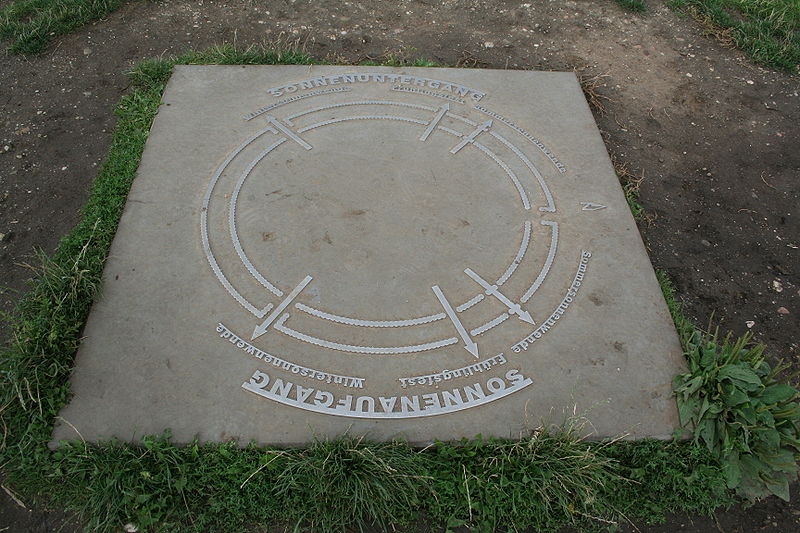
800px-Goseck_Sonnenobservatorium_26In 2002 Peter Biehl and Francois Bertenes excavated a circular enclosure outside of Goseck, Germany. Now believed to have been there for seven thousand years, it was revealed in a 1991 aerial photograph of a wheat field in that east German location. When Biehl and Bertenes combined GPS data with the archaeological evidence from the site, they discovered the two southern gates of the henge marked the summer and winter solstice, thus possibly making it the world’s oldest solar observatory.
120px-Goseck-2I’m not sure how accurate the dating may be of the Goseck Circle, but one thing is clear. As long as mankind has lived on earth, he has been fascinated with time. Ancient calendars – using lunar and solar measurements – have been discovered around the world.
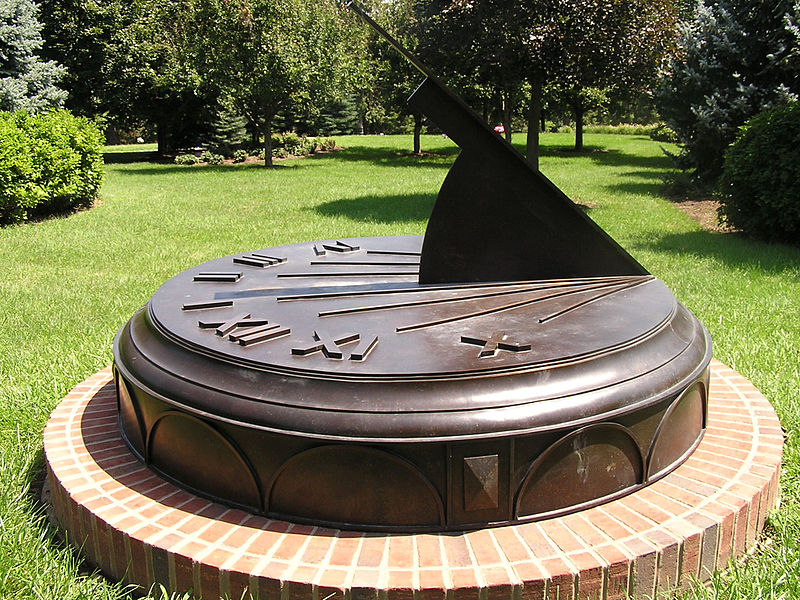
Sundials, indicating the time of day by the position of the sun, must be aligned with the axis of the earth’s rotation to tell the correct time. There are several types of sundials, but in the horizontal sundial, the style (that part which casts a shadow) must point toward true celestial north.

800px-Omaha_Bronze_Sundial_by_Carmichael

Our lives revolve around time. Each year is marked by birthdays. Children divide their years into school time and vacation time. Working adults mark their calendars for retirement. Productivity is measured by how much we can squeeze into each hour of the day. Periods of refreshment come when we have a minute to ourselves. On and on it goes. Every minute counts.

As a Christian, I know that God has given us the gift of time and expects us to use it for His glory. Our true north is His purpose and will for our lives. The psalmist declared, Yours is the day, Yours also is the night; You have prepared the light and the sun. You have established all the boundaries of the earth; You have made summer and winter (Psalm 74:16-71).

Stewardship of our time is as important – or even more important – than what we do with the monetary resources He gives us. 

Live life, then, with a due sense of responsibility, not as men who do not know the meaning and purpose of life but as those who do. Make the best use of your time, despite all the difficulties of these days (Ephesians 5:15-16 Phillips Translation of the New Testament).

The Balancing Act

1684_Circus_20As a child, one of my favorite times of year was when the state fair or the circus came to town. One of the attractions, to me, was the number of balancing acts. Since I have a very bad sense of balance myself, I always admired the trapeze artists who could swing through the air with the greatest of ease, the jugglers who could toss plates and what appeared to be bowling pins in the air and they never landed on the ground. Even the elephants could work their way around the ring balancing on a ball. I thought those acts were amazing then and I still do.

94px-1687_Circus_50Life is like those balancing acts. Most of us have to balance several things throughout a day – a job, family, mealtime, time for exercise, church and community obligations – for some people the balancing act seems endless. Many feel they should multitask many of these things. Although many things can successfully be done together (one of my favorite things is to have my grandchildren help me cook combining family time with mealtime), trying to do more than one thing at once can often be very frustrating. Contrary to popular opinion, multitasking does not necessarily lead to more productivity.

The key to a balanced life is to prioritize. Unless we successfully prioritize those plates we are juggling in the air can all come crashing down on us in extreme stress and diminished health.

1691_Circus_250Prioritizing means planning – doing the most important things first. Obviously there are times in life when we have to make adjustments. Emergencies do happen. Without planning, though, the events of the day take over and we might not accomplish the things God wanted us to do.

A lot of us are guilty of leaving out the most important thing of all. That is time with God. Martin Luther said, “I have so much to do today that I shall spend the first three hours in prayer.” Billy Graham was asked in an interview, “If you were to do things over again, would you do it differently?” His answer was, “Yes, I would spend more time in meditation and prayer.” Talking about his many speaking engagements, he said, “If I were to do it over again, I would organize it much better.” If Billy Graham looked back on his incredibly productive ministry and made that statement, what about the rest of us?

“Teacher what is the great commandment in the law?” Jesus said to him, “‘You shall love the Lord your God with all your heart, with all your soul and with all your mind. This is the first and great commandment. And the second is like it: ‘You shall love your neighbor as yourself’ (Matthew 22:36-39).

Fear and Panic Can Cloud Your Thinking

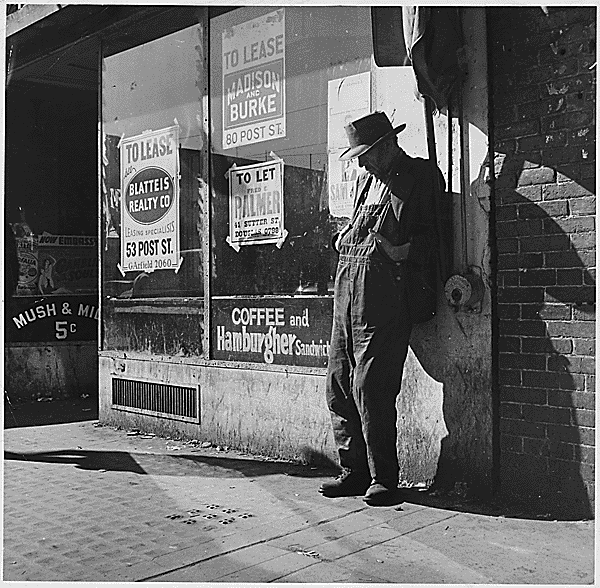
Destitute_man_vacant_storeI do a lot of reading about fear – in the Bible and other sources – because fear and panic come naturally to me. I am always working to conquer both.

Although few Americans owned any stock at the time, the Wall Street Crash of 1929 was the first in a sequence of events that eventually resulted in a wide spread panic and a Great Depression that lasted well over ten years.

With their economic stability threatened, some lost their ability to reason and hope. Some even committed suicide.

Failures of massive financial institutions in the U.S. in the fall of 2008 began another economic worldwide crisis. The stock market crash of that year has now been described as the Wall Street Panic of 2008.

By definition, a stock market crash is a result of panic. “A stock market crash is a sudden dramatic decline of stock prices across a significant cross-section of a stock market, resulting in a significant loss of paper wealth. Crashes are driven by panic as much as by underlying economic factors. They often follow speculative stock market bubbles.” (from Wikipedia)

Regardless of why a stock market crashes, the resulting impact is very personal. Loss of resources you have worked hard to acquire is a major blow. Having to start over again in middle age or retirement age can be devastating.

It does take money to live. You cannot obtain food, clothing or houses without it. If you are responsible for a family, the concern is magnified.

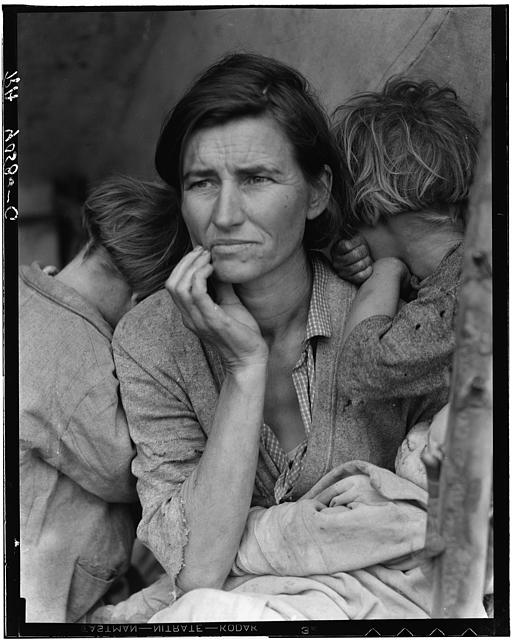
8b29516rHowever, despair is not inevitable. As President Roosevelt said, “the only thing we have to fear is fear itself – nameless, unreasoning, unjustified terror which paralyzes needed efforts to convert retreat into advance.”

If a major lifestyle change has become necessary for you, it need not ruin your life. Solutions begin with a positive attitude and a faith that God is with you.

The choice is yours. You can panic and lose hope or you can explore creative ways to provide what you need.

Better is a little with the fear of the Lord, than great treasure with trouble. Better is a dinner of herbs where love is, than a fatted calf with hatred (Proverbs 15:16-17).

The Justice System

Once, when our insurance company refused to pay some legitimate claims (totaling thousands of dollars), we had to get an attorney involved. Thankfully, he was able to accomplish what we couldn’t. Without him, though, we would not have had a chance. We had reasoned all we could. We had made every call we could make. We had sent in every document they asked for. They said no. We appealed. Their committee said no. We had only one chance left. We sought professional help. We needed an advocate – someone with authority in the justice system. A few weeks later, the insurance people apologized and paid the bills – finally.

GavelSpiritually, we owe an enormous amount of debt. It keeps adding up. In this case, we have no legitimacy in which to file a claim. The debt is ours. The One to whom we owe the debt could rightly send us to prison because we have no means to pay those bills – whatsoever.

Enter our advocate Jesus. He knows we owe that debt and we can’t pay, but He has absolute authority in the spiritual justice system. He doesn’t make any calls. He doesn’t write any letters. He doesn’t have to. He is the One we owe. He does something remarkable. He pays our debt for us. Our bills are stamped “paid in full” never to be drudged up again.

The reason God does this is hard to comprehend. He does it for His own sake. God’s standard is perfection so if we are to fellowship with Him, our sin debt must disappear – forever. Our holy and just heavenly Father demonstrated His love with the gift of the perfect life, sacrificial death and resurrection of His Son. “I, even I, am He who blots out your transgressions for My own sake; And I will not remember your sins” (Isaiah 43:25).

There is no committee that meets to consider our debt problem, but there is a judgment rendered. In His courtroom, He is prosecutor, defender and judge. The case is presented. Prosecutor (the law of God) makes the case. Our defender (Jesus) knows we are guilty. His plea is not that we are innocent, but He and the Judge have decided that He be allowed to take our punishment on Himself. Even though the cost is great both to the righteous Judge and His innocent Advocate, the substitution is accepted. His innocence is then transferred to us – the ones who deserved a guilty verdict but through faith in Christ became a child of God.

God’s standards did not change for us once we became part of His family. He wants us to be holy as He is holy. As God’s children, we have escaped God’s wrath for eternal damnation, but we can still cause Him grief by continuing to sin. I think the sins of a child of God must cause Him more pain than sins of an unbeliever. We should know better. We should be grateful our debt has been paid.

Our sin separated us from God and crucified His Son. The sins of His children can pierce the heart of the Father by treating the substitutionary sacrifice of Jesus lightly. Amazingly, His grace continues to work to bring us into right standing with the Father.

My little children, these things I write to you, so that you may not sin. And if anyone sins, we have an Advocate with the Father, Jesus Christ the righteous (1 John 2:1).

The Work of the Vinedresser

I am the true vine, and My Father is the vinedresser. Every branch in Me that does not bear fruit He takes away, and every branch that bears fruit He prunes, that it may bear more fruit (John 15:1-2).

Parents want their children to live productive lives. So does our Father in heaven. Once we become His children, He works to accomplish His will in our lives. When the Vinedresser notices that any branch is not producing fruit, He goes to work to remedy that. Although many translations say “takes away” in verse two of John 15, a clearer translation of the Greek word airo would be to “take up” or “lift up.” This same word – airo – is used in Matthew 14:20 when the disciples “took up twelve baskets of food;” in John 4:11, “in their hands bear thee up;” in John 5:8, “Take up thy bed and walk;” and John 11:41, when “Jesus…lifted up His eyes.”

New branches have a natural tendency to trail down and grow along the ground, but they don’t bear fruit there. Their leaves get coated in dust. When it rains, they get muddy and mildewed. The branch becomes sick and useless. The vinedresser goes through the vineyard with a bucket of water looking for those branches. After he lifts them up, washes them off and wraps them around a trellis, the branches begin to thrive.

That’s the way of our Father. In loving kindness, He lifts us up from the grime of living too close to the ground.

If a branch is bearing some fruit, the Vinedresser prunes it or trims it up so that it will bear more fruit. If you suspect you are being pruned, examine yourself and acknowledge that God is trying to get your attention. Trust that since a loving parent would tell a child why he or she is receiving correction, your loving Father will do no less. If sin is the problem, repent and turn around.  If you conclude that you’re being pruned, ask God to show you clearly what He wants you to let go of, and trust Him enough to release it.

Mature pruning is expressed in the Bible as the testing of your faith. Count it all joy when you fall into various trials, knowing that the testing of your faith produces patience. But let patience have its perfect work, that you may be perfect and complete, lacking nothing (James 1:3-4). In this you greatly rejoice, though now for a little while, if need be, you have been grieved by various trials, that the genuineness of your faith, being much more precious than gold that perishes, though it is tested by fire, may be found to praise, honor and glory at the revelation of Jesus Christ, whom having not seen you love. Though now you do not see Him, yet believing, you rejoice with joy inexpressible and full of glory, receiving the end of your faith – the salvation of your souls (1 Peter 1:6-9).

“You are already clean because of the word which I have spoken to you” (John 15:3). Jesus told Peter when he said, “Lord, wash not only my feet, but my head and my hands,” “He who is bathed needs only to wash his feet, but is completely clean, and you are clean, but not all of you” (John 13:10). Those whom Jesus loves, He continues to wash their feet, whom the Lord loves He chastens…Now no chastening seems to be joyful for the present, but painful; nevertheless, afterward it yields the peaceable fruit of righteousness to those who have been trained by it (Hebrews 12:5-6, 11).

Tony Dickerson of the Royal Horticultural Society says, “While decorative vines require minimal fuss, those for fruit are more demanding and require careful pruning if they are to be usefully productive.”

Karen Cutler, author of The New England Gardener’s Book of Lists and editor of gardening handbooks, says “the general goal when pruning vines is to keep them healthy, vigorous and productive…to keep a vigorous climber healthy, you must do the following.” I added my comments in brackets.

  • Remove any dead, damaged, diseased or unproductive stems. [God will gently remove anything in our lives that is not our best. It may be a diseased way of thinking (harboring bitterness, etc.) or something we carried over from our life before Christ which is damaging our witness, or an unproductive habit. Is there anything you have been holding onto that you suspect God is trying to trim away?]
  • Remove overly tangled stems. [God will continually remind us that we are in the world, but not of it. Put first the kingdom of God. Are you the same on Monday as you are on Sunday?]
  • Remove errant stems, especially those growing away from the support. [God will always work to bring us back to Himself. In the case of the prodigal son, he needed discipline as a son, but he was still a son and the father was watching continually for his return. If we are truly interested in bearing fruit for God, He may prune us by pulling us back before we go to the “far land.” Christians struggle against good, better and best. Are you achieving God perfect plan for your life or are you just doing good things?]
  • Direct its growth. [This may be one of the primary reasons for being pruned: God’s loving hand is directing us to be all He created us to be. When we think of God’s love and care for us, we visualize our comfortable place where we lie down in green pastures (Psalm 23:2) and dwell in the secret place of the Most High, abiding under the shadow of the Almighty (Psalm 91:1-2). Even the most adventurous of us do not invite the pruning of the Vinedresser. Yet pruning is one of the primary ways He expresses His love to us.]

As children of the King, we have our inheritance secure. We will live with Him forever, but because He loves us so much, He wants us to have something to bring with us when we enter the gates of heaven. If it were not God’s purpose for HIs children to bear fruit, He would probably have taken us to our final home as soon as we were born into His family.

You did not choose Me, but I chose you and appointed you that you should go and bear fruit, and that your fruit should remain, that whatever you ask the Father in My name He may give you (John 15:16).

© Stephanie B. Blake

July 2013

Download The Work of the Vinedresser