Author: StephanieBBlake

I love to help others focus on the one thing that's most important in life through my ministry, teaching and writing. As Vice President of Xtend Ministries International - www.xtendinternational.com, I travel extensively with my husband. I maintain two websites: www.onefocusministries.com and stretchmoney.wordpress.com. On the One Focus site, you can find free Bible studies, devotionals and information about my first book, "The Prayer Driven Life". My book, "Money: How to Be Rich Without It and How to Stretch It Using Ten Hints from the Past and the Technology of Today" was the inspiration for stretchmoney.wordpress.com. Money saving hints are contained throughout the book and this site was created to continue to give helpful hints on stretching money or having the proper view toward money.

The Man Called Paul

The man we know as Paul was born Saul of Tarsus. Saul is the name that is used of him up to and including a short time after his conversion. In Acts 13:9, in recording the confrontation that Paul had with Elymas the sorcerer, Luke said, Then Saul, who also is called Paul …. From that time on, Luke refers to the apostle as Paul instead of Saul. From then on, all biblical references to him are as Paul except in those times when Paul gives his own testimony, and he refers back to the times when the Lord and Ananias said, “Saul.” He starts each epistle with “Paul.”

The reason Luke chose this point in writing the book of Acts to stop referring to the apostle as Saul is not recorded, but Paul was the Roman form of his name. It is possible this name was given to him at birth for use in the Gentile world since his father was a Roman citizen. As Paul was called to give the gospel primarily to Gentiles, from now on I will go to the Gentiles (Acts 18:6) … from the Gentiles, to whom I now send you (Acts 26:17), using the Roman form of his name was probably more acceptable to those he was trying to reach. In what became Paul’s last letter, he told Timothy I was appointed a preacher, an apostle, and a teacher of the Gentiles (2 Timothy 1:11).

At the point in history when Saul of Tarsus was born, he had the best of both worlds. As a Roman citizen, he was accepted by the Romans and had all the rights due a citizen of Rome. As a Pharisee, born of the tribe of Benjamin, he was among the most respected of the Jews.

It might be said that he was “born with a silver spoon in his mouth,” as he had all the advantages of an influential family and came from the richest heritage of his race. Being blessed with a great mind, he was also given the best education available. His personality was such that he had the determination and energy to focus on those things he believed were important to his God, his faith, his country, his family, and himself, and to carry through on those beliefs. In short, he had everything going for him.

The Persecutor 

As an Israelite, Saul was so determined to stamp out any movement that threatened his religion he personally persecuted followers of the man called Jesus. He obtained permission to wipe them out. In many ways, Saul’s persecution of the Christians could be compared with Hitler’s persecution of the Jews. In his thinking, all Christians must be destroyed. However, one day on the road to Damascus, where he planned to continue his rampage against believers of Christ, the Lord Jesus Himself confronted him.

The first recorded prayer of Paul that we find is the conversation he had with the risen Lord on that road to Damascus. Having obtained permission from the government officials to persecute the believers of Christ, he was a man with a mission. It is possible to visualize his determination as he devoted his life to wiping out this new “sect.”

However, when Saul first heard the voice of the Lord, he was afraid. In response to the voice from heaven saying, Saul, Saul, why are you persecuting Me? (Acts 9:4), he asked, Who are You, Lord? When Jesus identified Himself, Saul trembling and astonished [responded], “Lord, what do You want me to do?”

A New Man 

In between Saul’s first and second questions, a change had come over him. When he discovered the God he was defending was the same God he was persecuting, Paul had only one option: to give everything he had to serve the Lord Jesus Christ. From that moment on, Saul’s heart, mind and life belonged to Jesus.

At that point, he became the apostle Paul. No longer did the voice of the Lord generate fear in his heart, but loyalty. That day started many years of communicating with the God he loved and served. His first prayer was, Who are You, Lord? but among his last prayers was I thank Christ Jesus our Lord who has enabled me, because He counted me faithful, putting me into the ministry, although I was formerly a blasphemer, a persecutor, and an insolent man; but I obtained mercy because I did it ignorantly in unbelief (1 Timothy 1:12-13).

Faced with the fact of the sacrifice of Jesus on his behalf was all it took for Paul to live the rest of his life in obedience to His will. His prayers were always reverent but bold, knowing that his faith was in a God who loves, forgives, and desires to communicate with His children.

In Saul’s conversion experience, he discovered an important truth for himself that he later communicated to his brothers in Christ. Only someone living outside of the will of God would perceive God’s voice as threatening.

© Stephanie B. Blake

October 2013

* This devotional is an excerpt from The Prayer Driven Life.

The Prayer Driven Life examines the prayers of the Apostle Paul. Although many people would admit that there is value in prayer, few can say that prayer is the driving force in their lives. Those who can make that statement have an intimate relationship with God. Often they leave a lasting legacy for others.

Paul is an excellent example of someone whose life was driven by prayer. Using his prayers as a backdrop,The Prayer Driven Life examines essential questions about prayer. What is it? Why should you pray? What difference does it make in your life?

The real value of Paul’s prayers is that they help you get to know God better. From the moment he met God’s Son on the road to Damascus, Paul’s life was driven by prayer. In prayer, he communicated with God and obtained guidance for his life.

So can we.

© Stephanie B. Blake

October 2013

Download The Man called Paul

A Legacy of Faith

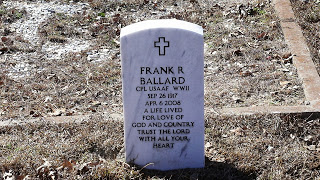
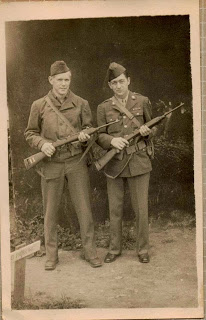
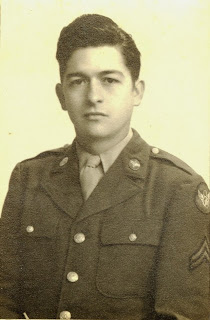
Frank Ballard Grave 002Today my Dad would have been 96. He lived through the Great Depression and World War II. God allowed him to live to 90. Had he kept a diary, it would have recorded an incredible amount of changes during his lifetime.

Dad had a love for family, a frugal nature and an abiding faith. “A life lived for love of God and c547396_3527358137646_407129404_nountry” was engraved on his tombstone.

When I went through his belongings after he died, it was like a journey back through my own life. He kept every picture, every letter, every gift I had ever given him – sometimes making notations of how he felt when he received them. My dad took special care to express his love to me – especially in his later years.

Like many of his generation, Dad watched every penny. He didn’t replace things. He fixed them. If he needed something, he often built it out of materials he already had. When my husband discovered Dad had repaired the seat in his recliner with a piece of plywood, he bought Dad a new one. Dad would probably have never purchased a new one even if he had the money.

Frank Ballard, WWII photoHis mother instilled in him a love for God that dominated everything he did. As far back as I can remember, Dad was looking for the second coming of the Lord Jesus. He felt confident it would happen in his lifetime. His favorite biblical subject was prophecy and he poured over every reference in the Old and New Testament to it. He was in his eighties when he wrote a book, The Unveiling: How the Symbols of Prophecy Reveal What Happens in the Last Days. 

I miss my Dad. His legacy lives on. I will see him again.

I will always remember that his favorite verse was Trust in the Lord with all your heart and do not lean on your own understanding. In all your ways acknowledge Him, and He will make your paths straight (Proverbs 3:5-6).

Pivotal Point in History

Throughout my lifetime, I have been accustomed to seeing historical dates using BC – before Christ – and AD – Anno Domini meaning the year of our Lord. Although they have been around for a very long time, I have recently discovered an alternative to this dating: CE – Common Era – and BCE – Before Common Era. The C in these designations can also mean Christian or Current, but since Common Era and Before Common Era do not explicitly reference Christ or Domini, they have become more acceptable. It seems that because the BC and AD usage is offensive to non-Christians, authors, publishers and other groups wishing to be neutral use CE and BCE attempting to remove overt references to Christ.

Sadly, in America, this type of non-Christian sensitivity has reached a new level. Even though America’s beginnings are clearly and deeply routed in Christianity, our tolerant society is tolerant of everything but Christianity. Every other special interest group has increasing voice and rights while the voice and rights of Christianity is diminishing.

Try as they might, societies wishing to ignore the impact that Jesus made in history cannot be successful. His birth, life, death and resurrection remain the pivotal point in the history of His created world.

Even those who do not or will not celebrate or recognize Christmas and Easter cannot ignore them.

History is the story of God’s love expressed through His Son, Jesus Christ. It is really His Story. Everything preceding His arrival looks forward to it. Everything after His resurrection reflects back on the meaning of that event.

The sixty-six books of the Bible are divided into two sections. The Old Testament chronicles the journeys of faithful men and women of God who looked for the Messiah. Many prophesied about that day. The New Testament begins with the birth of Jesus, gives the story of His life, death and resurrection, the activities of the first century church, promises His final appearance and notes the judgment that will take place when history is over.

Of all the events in the life of Jesus that marked the fulfillment of the prophecies of the Old Testament that was fleshed out in His person in the New Testament, His resurrection is the culmination of all that had come before.

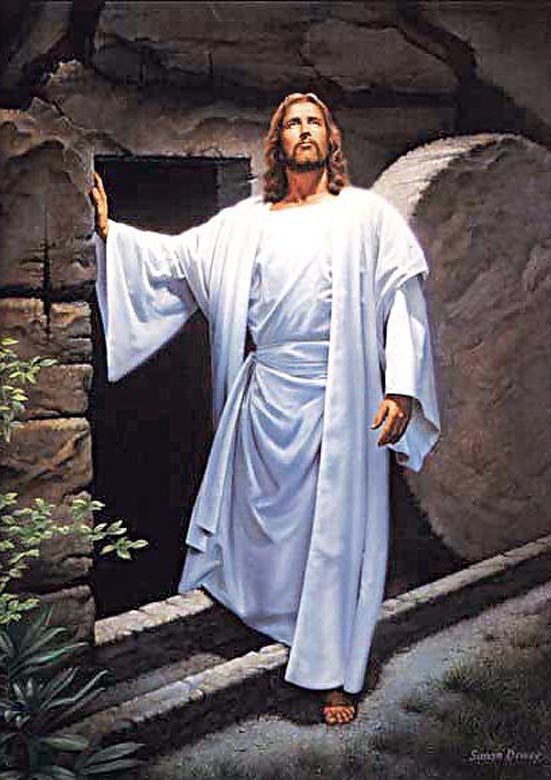
f72123The resurrection of Jesus Christ marks the pivotal point in history where reconciliation between God and man became possible. His birth was miraculous. His life was pure and without sin. Jesus revealed God in the flesh. His death was the sacrifice for our sin. It was the resurrection that put the period on all that had come before. With the resurrection of Jesus, His mission was completed.

And if Christ is not risen, your faith is futile; you are still in your sins!…If in this life only we have hope in Christ, we are of all men the most pitiable. But now Christ is risen from the dead... (1 Corinthians 15:17,19,20).

The Center

I am intrigued by how one word in the English language can have so many meanings. Take the word “center” for instance.

As a noun, we use that word in many ways.

We refer to someone wanting to be the center of attention; someone we deeply love as the center of our world, an important place being a center of influence, or the point or focus of discussion being the center of debate.

In sports, we refer to the middle player on the basketball team as a center. In baseball, the center fielder is the outfielder who plays defense in center field – the baseball fielding position between left field and right field. Center is a position held in American and Canadian football. He is the player who passes (or snaps) the ball between his legs to the quarterback at the start of each play. He is the innermost lineman of the offensive line on a football team’s offense.

Centre (British spelling) is a position held in Australian rules football, ice hockey and rugby and there is a centre forward in Water Polo.

In cooking, we core the center of the apple or bake a cake or truffle with a surprise in the middle – maybe a chocolate center.

In aviation, the Area Control Center is an Air Traffic Control facility covering a large region of airspace not associated with a particular airport.

In mathematics and science, we refer to the center of mass and the center of symmetry.  A centroid is a geometric center.

We refer to a place where a specific activity is concentrated as a center – such as a center for medical research, a shopping center or a town center.

In general, the center represents the middle point with equal distances from all sides of something such as the center of the ceiling or the center of a vast territory.

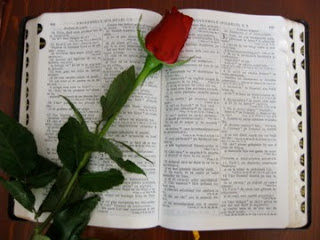
The center of the Bible is Psalms.118. There are 594 chapters before it and 594 chapters after it.  The center verse of the Bible is Psalm 118:8.

When we focus on God, everything around us takes on a different perspective. He loves us. He does have a plan. His plan is good. His perfect will is that we trust Him.

In these days of confusion and uncertainty, going to the center of God’s word can get us on track again – can center us on what is most important.

“It is better to trust in the Lord than to put confidence in man” (Psalms 118:8 NKJV).

Bibbia_con_rosa


The Last Shall Be First

Traveling exposes me to an interesting array of circumstances. Whatever mode of transportation I use I observe human nature at work. Watching crowds operate – and being a part of those crowds – is an educational experience.
629px-Board-a-Plane-Step-2Most of the time I board an airplane using a jetway from the waiting area in the airport. As a frequent flyer, I may be one of the first people to enter the airplane although I am often one of the last to disembark because I purchase tickets in economy and my seat is usually located in the back of the airplane.

Jetway--Gate-37
At other times boarding requires riding a bus out to where the airplane is parked on the tarmac. People often line up early in order to get on the bus first, but I have noticed something interesting when that happens. Airport personnel require those who enter first to go all the way to the back of the bus in order to make room for the others who are boarding. The scurry to be first on often results in being last off.

Jesus knew this principle well when He said,”But many who are first will be last, and the last will be first” (Matthew 19:30, 20:16, Mark 10:31).

Matthew 19:30 and Mark 10:31 record the same situation. In response to Peter’s statement that His disciples had left everything to follow Him, the Lord tells Peter His true disciples will have reward in heaven. He then said, “But many who are first will be last, and the last, first.” I get the feeling He is telling Peter many people will be surprised.

In Matthew 20, Jesus, as He often did, was telling His disciples what the kingdom of heaven was like. A landowner needed laborers for his vineyard. Early in the morning he hired some agreeing to pay them a denarius for the day’s work. He hired more at the third, sixth, ninth and even the eleventh hour. At the end of the day, he paid each one a denarius, no matter how long they had worked. When the ones who had been hired first, and had worked all day long, grumbled at the generosity of the landowner, he replied, “Is it not lawful for me to do what I wish with what is my own? Or is your eye envious because I am generous? So the last shall be first, and the first last.”

When all is said and done, we may be in for a few surprises. Our way of accounting and God’s way are not the same. He knows who has tried to push and shove his way into heaven with a false belief that he deserves to be there. He also knows who is truly grateful for His generosity, painfully aware that without His love and grace we would not be able to enter at all.

The Healing Power of Thanks

In everything give thanks; for this is the will of Christ Jesus for you (1Thessalonians 5:18).

 The Gift of Thanksgiving

Loving spouses give of themselves unreservedly to the relationship, not for the purpose of being noticed or expecting thanks. Love puts the other person first – simply because one wants what is best for the other person. When acts of kindness are noticed, however, there is a special atmosphere in the home – very different from a home where every contribution is expected and unacknowledged.

Likewise, parents and grandparents don’t do things for their children or grandchildren just to be appreciated, but a hug, a smile and crayon drawings can warm their hearts. Gratitude from a child is like dessert after a good meal. You don’t have to have it, but the sweetness is a delight.

No one enjoys being taken for granted. Thanksgiving is a gift others give to us, but the reciprocal is also true. The golden rule applies. We love to be appreciated and others do too.

A Thankful Attitude

Thanksgiving has been described as an attitude of gratitude. It is s choice – a way of thinking – an acknowledgment of someone else’s contribution to your life.

Thanksgiving sets the stage for a good day. The lack of it can trigger a gloomy one. Even during times of adverse circumstances, it is difficult to be depressed if you count your blessings. Generally, you don’t have to look very far.

A thankful attitude can make the difference between being happy or depressed, being healthy or getting sick, or even staying sane or going insane. We have a choice.

Thanks to God 

Oh give thanks to the Lord, for He is good, for His mercy endures forever” (1 Chronicles 16:34; Psalm 106:1, 107:1, 118:1, 118:29, 136:1 NKJV).

Every good thing comes from God. He is the ultimate example of unselfishness. Evidence of His love and care are all around us. His supreme demonstration of that love was expressed in the gift of His Son as our Savior.

We often forget He has feelings, too. When we accept His blessings as if we deserve them and neglect to give Him thanks, He notices.

And grieve not the Holy Spirit of God, by whom you were sealed for the day of redemption (Ephesians 4:30 NKJV). Paul wrote these words to Christians – believers who are part of the family of God. With unbelievers, God can be justifiably angry. With His children, He can be grieved. In a sermon on this passage, the great preacher Charles Spurgeon made this observation:

Here is something very touching in this admonition, “Grieve not the Holy Spirit of God.” It does not say, “Do not make him angry.” A more delicate and tender term is used – “Grieve him not.” There are some men of so hard a character, that to make another angry does not give them much pain; and indeed, there are many of us who are scarcely to be moved by the information that another is angry with us; but where is the heart so hard, that it is not moved when we know that we have caused others grief? – for grief is a sweet combination of anger and love. It is anger, but all the gall is taken from it. Love sweetens the anger, and turns the edge of it, not against the person, but against the offense. When I commit any offense, some friend who hath but little patience, suddenly snaps asunder his forbearance and is angry with me. The same offense is observed by a loving father, and he is grieved. There is anger in his bosom, but he is angry and he sins not, for he is angry against my sin; and yet there is love to neutralize and modify the anger towards me. Instead of wishing me ill as the punishment of my sin, he looks upon my sin itself as being the ill. He grieves to think that I am already injured, from the fact that I have sinned. I say this is a heavenly compound, more precious than all the ointment of the merchants. There may be the bitterness of myrrh, but there is all the sweetness of frankincense in this sweet term “to grieve.”

God is our heavenly Father. We can grieve Him with our sin and our thoughtlessness in our attitude towards Him and His blessings.

The apostle Paul was in prison when he wrote, “speaking to one another in psalms and hymns and spiritual songs, singing and making melody in your heart to the Lord, giving thanks always for all things to God the Father in the name of our Lord Jesus Christ” (Ephesians 5:19-20). For the Lord’s sake, he was beaten, imprisoned, stoned, shipwrecked, hungry and thirsty, and in perils in many circumstances. In everything give thanks; for this is the will of Christ Jesus for you were not empty words to him. They were his life. He knew that regardless of your circumstance, you control your response to it. In the midst of trials, thanksgiving directs your thoughts upward, not inward.

“Thanksgiving—the giving of thanks—to God for all His blessings should be one of the most distinctive marks of the believer in Jesus Christ. We must not allow a spirit of ingratitude to harden our heart and chill our relationship with God and with others. Nothing turns us into bitter, selfish, dissatisfied people more quickly than an ungrateful heart. And nothing will do more to restore contentment and the joy of our salvation than a true spirit of thankfulness.” – Billy Graham

Give thanks to God. He is delighted with our thanks and knows its healing power in our lives.

Oh give thanks to the Lord! Call upon His name; make known His deeds among the peoples (1 Chronicles 16:8, Psalm 105:1). But thanks be to God, who gives us the victory through our Lord Jesus Christ (1 Corinthians 15:57). Scripture references are from the NKJV.

© Stephanie B. Blake

September 2013

Download The Healing Power of Thanks

Stand Up Straight

As a young person, I remember being reminded to stand up straight. That was good advice. Not only do I look different when I sit up straight and stand straight, I feel better.

vintage-dresses-3-tnTo improve posture, a young girl might walk through her home with a stack of books on her head. In that upright position, it is impossible to look down or to the left or to the right without toppling the books. Her gaze must be forward. Her concentration is straight ahead.

The expression, “He is no slouch,” means he is not lazy and doesn’t mind working. Slouching gives the appearance of laziness.

Slouching is not good for your health. Slouching while standing or sitting can cause spine alignment issues. Office workers are particularly susceptible. Every inch you hang your head forward can add ten pounds of pressure on your spine.

If you work at a computer for several hours a day, you know what I’m talking about. Your chair and your sitting position are very important. As back pain is a common work-related injury, many companies have found it necessary to make sure their working environment is ergonomically correct.

I spent a few years working in a chair I loved but it was giving me a backache. My husband bought me a better chair and the problem went away.
Standing erect is not only good for your posture. It is imperative for your spiritual life. Those who are upright are disciplined in righteousness, justice and integrity. Upright is defined as an object that is vintage-dresses-1-tnvertical or erect or a person that is honorable or honest. In the Amplified Bible, the word upright is often translated as consistently or uncompromisingly righteous, one who walks uprightly, in right standing with God, or moral and spiritual rectitude in every area and relation.

An upright person is not perfect, but focused. Occasionally the books will fall. The posture of a focused Christian will improve with time and practice. The more determined one is to love God and please Him, the more disciplined he will be.

The upright godly person walks with wisdom, looking forward, considering the steps of the path before him and is determined not to let distractions turn him aside from the path God has chosen for him.

...His secret counsel is with the upright (Proverbs 3:32 NKJV). …His confidential communion and secret counsel are with the [uncompromisingly] righteous [those that are upright and in right standing with Him] (Proverbs 3:32 Amplified).

Look on the Bright Side

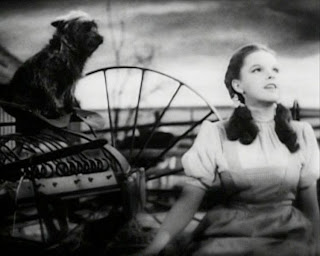
Like so many other people, I enjoy watching The Wizard of Oz. It is one of my favorite movies. There have only been a few child actors with as much talent as Judy Garland, who played Dorothy. Over the Rainbow became her signature song, but sadly she did not leave her clouds far behind her “where troubles melt like lemon drops.” She went on to have an incredibly successful career, but all of her talent, fame and money didn’t bring her happiness. Instead of believing “behind every cloud there is a silver lining” Judy thought that, “behind every cloud is another cloud.” Judy was obviously someone who thought the glass was half empty instead of half full as well.

749px-Judy_Garland_Over_the_Rainbow_2If you can leave the clouds behind you, it makes a difference. If you fly, you know that from an airplane, you can view the most beautiful sunshine on top of a solid cloud layer. You are seeing the world from above. Before you broke through the clouds, the day may have been as dark and gloomy as any you had ever known. Although the sun was obscured for a time underneath the clouds, it was always there. The difference you feel when the sun finally peeks through the clouds and brings warmth and light is nearly tangible.

Of course, it all depends on your perspective. Dark days of depression are often lifted even when the clouds are still there and the sky is grey. Your circumstances may have even gone from bad to worse. What changed? Do grey days take the sun away or do they just tempt you to forget it is there?

God is everywhere at the same time, above and below the clouds of life. If we could see things from His perspective, it would make all the difference. He is good all the time even when circumstances seem to tell you otherwise. He has a plan and it is good. The bright side of life is there. It is found in Jesus.

Praise the Lord! Oh give thanks to the Lord, for He is good; for His lovingkindness is everlasting. (Psalm 106:1).

It is good to give thanks to the Lord and to sing praises to Your name, O Most High; to declare Your lovingkindness in the morning and Your faithfulness by night…I will sing for joy at the works of Your hands (Psalm 92:1-4).

For I know the plans that I have for you, declares the Lord, plans for welfare and not for calamity to give you a future and a hope (Jeremiah 29:11 NAS).

The Story of the Good Shepherd as Told by a Little Lamb

I awoke with a start, unusually stiff, cold and terribly uncomfortable. The ground I slept on last night was not the soft, dense grass I was accustomed to. This was hard with patches of prickly weed poking me even through my thick wool.  Where was I and how did I get there?

As I struggled to my feet and looked around, I suddenly remembered my folly of yesterday. I had ventured away from my pasture, traveling to what I thought was a plush grass with a beautiful view and a small, clear brook in the distance. Everything had looked so inviting, but my eyes had deceived me. Now I realized what I believed was a path to a better place had been a mirage.

What would I do now?  How would I get back to my mother, my family and the good shepherd? At the end of the evening, the good shepherd counts every one of us and calls us by name back into the sheepfold for the night’s rest. I knew they would be missing me by now. I didn’t know which direction to go, but I decided to head back toward the way I thought I might have come from.

My spirit did not get better as I tried to find my way home, for I was frightened and all alone.  It wasn’t too long before I found myself in a patch of briar bushes. The thorns were so sharp I started to bleed. I couldn’t seem to go forward and I couldn’t turn around. I was hopelessly caught in the bushes.

My struggle was halted, though, with a dread unlike anything I had ever felt before. I felt hot, fast breathing behind me and the smell that filled my nostrils took my breath away.  My heart started beating so hard I thought it could be heard for miles. Although I didn’t want to look, I knew I had to see what was behind me. I twisted and tried to turn, falling into the bush in the process. My worst fears were confirmed. Coming slowly toward me was a wolf.

Oh, the thoughts that filled my mind. If only I had paid attention to my mother’s words. “Never wander outside the fold. Don’t leave the protection of your family. Keep your eyes on the good shepherd. He knows how to take care of us.” How I wish I had taken heed of that advice yesterday. I would not be facing my certain death today!

Just as the wolf was about to make his lunge for my neck, he fell to the ground right in front of me. I had closed my eyes for the inevitable, but when I heard the loud thump of his body, I opened them again to see the wolf, dead, no longer able to have me for his dinner.

Then I saw the good shepherd with the slingshot in his hand. He put it back in his belt, looked at me lovingly and said, “Little lamb, there you are.  I have been looking for you.” Relief filled my heart. His was the voice I knew so well and had been longing to hear. As he gently lifted me, taking care to pull the thorns from my wool and some from my flesh, his eyes were tender, not at all condemning me.

I had gone astray through my own foolishness, and yet he did not mention it.  All the loneliness and fear left me immediately as the strength and security of his loving arms cradled my sore, weary body close to his heart. I rested my head on his chest, silently vowing never to stray again. Not only was I sure I never wanted to ever feel so scared, but I did not want my mother and the good shepherd to pay the price of worry and sacrifice for my own foolishness.

I must have wandered far away from home because it took us quite awhile before we came close to our own green pastures. At the edge of the field, the good shepherd set me down by the still waters I knew so well. He tended all my wounds, taking care to wash away the blood from my fur. Even though he said nothing to me, I knew he wanted to make sure my mother did not see me in the condition in which he found me. After he finished cleaning me and making sure I had quenched my thirst, he lifted me again, cradling me into the crook of his arm where I fell asleep.

The next thing I knew, the good shepherd was laying me down next to my mother.  She was rejoicing and thanking him for finding me. Her eyes met his and he knew that she would remind me again of the treasure of knowing that he was always with us and his rod and staff were our guide and comfort.

I begged mom’s forgiveness and told her I had learned my lesson the hard way. The things that look so good on the outside can be so deceptive. She had reminded me many times before that sheep are defenseless animals. We need our shepherd. Now I knew that firsthand. I would never again take my eyes off the good shepherd.

The years went by and I frolicked and played with my family and friends. Fall turned into winter, winter into spring, spring into summer, and summer back into fall again. Every night, the good shepherd led us into the sheepfold with other flocks and posted his own body as guard at the gate. In the morning, he gathered us from among the other sheep by calling our names aloud, one by one.

How wonderful it was to hear his voice call my name, “Little lamb, follow me to the pasture.” The good shepherd always made sure we did not want for anything.  Sometimes we had to journey onto other green pastures, but we kept our eyes on his staff as we traveled.  If our feet wandered from the rest of the flock, his staff lovingly brought us back. When he found another place with the resources we needed, he lowered his staff and we made pasture there.

As time went on, I had lambs of my own. I echoed the teachings of my mother and paid close attention to my lambs so they would not leave the abundant pasture of the day and the secure fold of the night. My lambs tried to stray occasionally, of course, as lambs are prone to do. I had made a pledge to myself, though, that as long as my sights were on the good shepherd I could call him to bring them back if I needed to.

One day, as my lambs were playing together at the other end of the pasture, I saw a new sheep come into our pasture. It was so unusual to see someone I didn’t know. The entire flock was familiar to me, but this one was a stranger. More than curiosity was getting the better of me. I just couldn’t believe there was a sheep I had not met yet.

This sheep did not seem to want to mix and mingle with the rest of us, but I was determined to make his acquaintance and started walking toward this new arrival. The closer I got, however, the more uneasy I felt. He was larger than most with a walk that was more like stalking than the accustomed slow meander of my friends and family.

Then my heart felt like it was turning to stone. I stopped dead in my tracks. This was no sheep. I caught a look into his eyes and recognized the kind of gaze that had frightened me those many years ago. This was a wolf, disguising himself as one of my very own. As his eyes caught mine, I felt the same immobilizing fear I thought I would never experience again.

The wolf was taking his time coming toward me enjoying my fright. I was frozen in my steps unable to make a move or a sound. Then I saw the good shepherd come between us.  My savior again! He would kill the wolf and the flock would again be safe. To my horror and amazement, the good shepherd did not kill the wolf. In fact, it became obvious he did not intend to kill him. Instead, as the wolf glared at him with teeth bared and ready for attack, the good shepherd transformed in front of us both. My good shepherd became a lamb just like me. He turned his head briefly and gave me a look of deep devotion and compassion, then lay down in between the wolf and me and willingly sacrificed himself to the devouring appetite of the evil wolf. I could not believe my eyes.  How could this be?

After the wolf had his pleasure with the meal that was set before him, he seemed to lose interest in the rest of us and walked confidently and triumphantly out of the pasture. He seemed to be satisfied for the moment.

My feelings of devastation were beyond description. My good shepherd was gone. He has given his life in my place. What would I do? What would we do? We had always had the guidance and protection of our good shepherd and now he was gone, having sacrificed himself for me. I didn’t understand. I was so helpless and afraid. What would become of us?

As tears filled my eyes, I laid down in deep despair. Grief overtook me and I could not even contemplate what life would be like without the good shepherd. I knew I was not capable of protecting my little lambs.

As sobs shook my body, I suddenly felt a firm, strong hand on my shoulder. I looked up – the good shepherd! No, it was not the good shepherd that had just given his life for mine, but another shepherd. He wiped my tears and sat on the cool grass and placed my head in his lap. He said, “Grieve no more, little lamb, for the sacrifice you witnessed was not a mistake. I, too, have been the recipient of his redemption. I am one of the under-shepherds the good shepherd has been training for this very day. He told us about his sacrifice and how it would be necessary to satisfy the evil wolf. He said if we all trusted him he would continue to protect us. There are other under-shepherds as well and he commissioned all of us to take care of his lambs. We will all keep in remembrance what he has done for us. I will be here for you and we will remember him and his sacrifice together.” Although I didn’t thoroughly understand, I believed the under-shepherd and knew that the good shepherd was still there, providing and caring for us all.

As the years went on, my family grew. My lambs had lambs of their own.  As each little lamb grew old enough to hear the story, I would tell of the good shepherd and how he gave his life for mine. How I loved telling that story. Each time I told it, I couldn’t help but feel tears of gratitude well up in my eyes. Sometimes my lambs would ask if I was crying. I would always say, “Not from sadness, my children, but from the joy of gratitude for the gift we have all received.” I would tell them of his provision for us here now and forever in the future. I watched as my lamb’s lambs played in the security of the green pastures.

My pace slowed as I got older, but I followed the under-shepherd each night into the fold where other flocks rested with the other shepherds that the good shepherd had prepared in advance. Now, instead of the good shepherd always taking the watch at the door of the fold, the under-shepherds took turns making sure we were all safe and secure from dangers of the dark.

One beautiful spring day, I was the last of the flock to leave the fold following the under-shepherd to the green pasture. On that particular day, I was drawn back to the very spot where the good shepherd had given his life for mine. I always felt a sense of amazement when I approached that spot. I had never deserved the kind of love my good shepherd showed to me. I had been so disobedient as a little lamb, but he willingly forgave me. What an incredibly unselfish love he had for me and all my kind. I loved the under-shepherd, to be sure, but I missed the physical presence of the good shepherd and longed to see his face once more. Sometimes coming to this spot helped me feel closer to him.

As I settled down on the cool, soft grass, I felt more weary than I had ever felt before.  My family was grown, and I had stayed true to my promise to keep them ever mindful of the wonderful gift of life and love we had all received from the sacrifice of my good shepherd.  He died that day allowing not only me to live, but all the generations beyond me. I longed to say, “Thank you,” in person. I laid my head down feeling a peaceful sense of contentment and drifted off into my last sleep.

As I opened my eyes, there was no sense of drowsiness. The tiredness was completely gone. I felt like a young lamb again. An inexpressible joy filled my heart. Then I realized I was no longer in the same pasture. This one was different in a way I could not describe. Excitement filled my heart as I became aware of the wonderful surroundings.

There was no sheepfold here, just goodness, mercy and peace. There was not just a stream here but a river of pure water, clear as crystal. Everything around me was light, but there was a light in the middle of the pasture that was brighter than all. My gaze was drawn to that light. I started to run as I recognized a familiar face, the face of my Savior.  My sacrificial lamb, the good shepherd, was sitting on a throne. As I reached him, I fell down on my knees and cried out with joy, “Thank you, thank you, thank you.”  He said to me with the look of kindness on his face that I remember so well, “You are welcome, little lamb. Welcome home.”

. . . for the Lamb who is in the midst of the throne will shepherd them and lead them to living fountains of waters (Revelation 7:17a).

© Stephanie B. Blake

August 2013

Download Story of Good Shepherd

The Safe Room

Safe RoomI live in an area of the United States of America that encounters tornado activity. Some years are worse than others, but every time a tornado comes through or near where I live, I am more and more convinced that it would be a good idea to have a “safe room” – one that would not be blown away by the ravaging winds of a tornado.

When the news media covers the storms and resulting devastation, the reporters show or tell how residents made it through the storm. The house may be leveled, but if the family rides out the storm in a storm cellar or a safe room, they survive with no injuries. Reporters relate story after story of people who heard the effects of the storm while in the safe room. Often the residents walk out of the safe room into what used to be their home with a sense of amazement that they made it through unscathed.

Companies that manufacture preformed safe rooms are busiest during this time of year. Those who did not have a safe room realize the value of one and place orders.

Life is full of storms. Many of them are as unexpected as tornadoes can be. They pop up when you least expect them. Often we are unprepared for the illness, job loss, family crisis or death that comes our way.

FEMA_-_5023_-_Photograph_by_Jason_Pack_taken_on_01-11-2001_in_AlabamaChristians have a permanent safe room. We should abide there not just in the storms of life, but every day. Even when things are going well, we need and have the loving presence and protection of our heavenly Father.

He who dwells in the secret place of the Most High shall abide under the shadow of the Almighty. I will say of the Lord, “He is my refuge and my fortress; My God, in Him I will trust.” Surely He shall deliver you from the snare of the fowler and from the perilous pestilence. He shall cover you with His feathers, and under His wings you shall take refuge. His truth shall be your shield and buckler. You shall not be afraid of the terror by night, nor of the arrow that flies by day, nor of the pestilence that walks in darkness, nor of the destruction that lays waste at noonday (Psalm 91:1-6).