Author: StephanieBBlake

I love to help others focus on the one thing that's most important in life through my ministry, teaching and writing. As Vice President of Xtend Ministries International - www.xtendinternational.com, I travel extensively with my husband. I maintain two websites: www.onefocusministries.com and stretchmoney.wordpress.com. On the One Focus site, you can find free Bible studies, devotionals and information about my first book, "The Prayer Driven Life". My book, "Money: How to Be Rich Without It and How to Stretch It Using Ten Hints from the Past and the Technology of Today" was the inspiration for stretchmoney.wordpress.com. Money saving hints are contained throughout the book and this site was created to continue to give helpful hints on stretching money or having the proper view toward money.

Families Adapting to a Changing World

Few families live in close proximity in America any more. In many other countries, the culture is still like America used to be – families and extended families are close enough to help out with many different aspects of family life. In America, that advantage has pretty much ceased to exist.
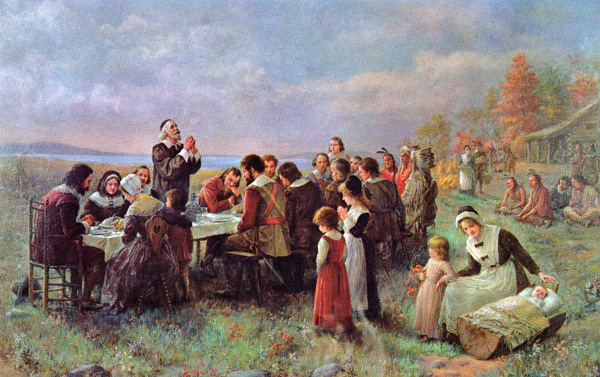
free-thanksgiving-pictures-2Think of the difference it has made in our society because most families do not live close to one another. Before, childcare was not an issue because grandparents or aunts and uncles lived down the street or in some cases in the same house. The sting of unemployment was relieved somewhat because family members shared what they had with each other. Planning for retirement meant moving from the downstairs portion of the house to the upstairs portion of the house so that the family members with small children had the larger living area. Traveling long distances for holidays was unknown because it was not necessary.

Rural living has largely been replaced by dwelling in large concrete cities. Instead of face-to-face conversations with family, friends and neighbors, people communicate by email and texting – often with their eyes glued to a small screen in their hand instead of a face of flesh before them.

My family is spread out all over the world. That is the way it is. I continue to long for the closeness of a loved one, catching a smile unnoticed or observing a loved one in a moment of time that cannot be captured by camera or video.

Since this is a present reality, I am thankful for gifts of modern technology that remind me of the personal touch of yesterday. I was able to experience this on an American holiday – even though my husband and I were home alone. Since my immediate family has a similar free internet service that enables us to call each other using microphones on our computers and see each other utilizing webcams, we were able to talk for several hours to family members – first with one son who was out of the country and then with our other son and his family while we were all preparing our meals. It was not exactly the same as having family come home for the holidays, but on that day, it was as close as we could get.

I am grateful as a child of God, I don’t have to wait for a phone call or a visit to be able to talk to Him. I don’t have to check a world clock for the time difference between where He is and where I am. I don’t have to worry about whether He is busy or He can’t answer my call. I can speak to Him at any time and He will hear me. His Spirit, who abides in me, can communicate immediately with me. He is always near and available, ready and delighted to hear from one of His children.

Jesus answered and said to him, “If anyone loves Me, he will keep My word; and My Father will love him, and we will come to him and make Our abode with him (John 14:23). By this we know that we abide in Him and He in us, because He has given us of His Spirit (1 John 4:13 NASB).

Really Seeing the World Around You

I subscribe to a writer’s magazine and follow several blogs submitted by their staff. The motivational tips on writing, information on the latest developments in the publishing industry, what kind of writing is currently attractive to readers, etc. keep me informed in an ever changing world. There is practically no way to keep up on all the pertinent information without help.

Theirs is not the only source I consult. I purchase books on writing, read what others write, fiction and nonfiction, and notice blogs where successful authors share their secrets and hints at sticking with their writing, no matter what. Some authors share how they conquer writer’s block. Others give helpful knowledge about grammar, word usage, punctuation and formatting.

Recently I read a guest post by Kevin Kaiser on Writer’s Digest entitled “What Bestselling Writers Do Differently Than Everyone Else.” Of his four points, it was the first one that caught my attention. Kevin said, “They are intent on seeing the world. Most of humanity hurries through the day in a fog, looking only where they need to in order to survive…But prolific and successful artists are students of the world around them. They pay attention because stories worth capturing are happening all the time right next to them. They just see it where others don’t. Eyes that look are common, eyes that see are rare.”

Kevin’s definition of an artist is “anyone who creates something that enriches the lives of others, whether that’s leading a vibrant organization, writing a book or singing a song.”

US_Navy_090722-N-8467N-006_Culinary_Specialist_1st_Class_Joseph_Appold_hugs_his_1-year-old_son_Kameron_upon_the_return_of_the_Virginia-class_attack_submarine_USS_New_Hampshire_(SSN_778)_to_Submarine_Base_New_LondonI think Kevin has captured the essence of a rich life – no matter what your occupation is. For instance, I heard an extraordinary speech given to military cadets. The speaker showed pictures of men and women he had worked with – some who had given their lives for our country. Along with the pictures, he told their stories. His speech was so moving and inspiring because he actually saw the men and women who served under him. He paid attention to them. Kevin said, “Eyes that see are rare.” This man’s eyes were definitely in that category. Anyone serving in his unit would know that he was not just a number or part of a unit, but that he had value.

At one point, Jesus’ disciples asked Him why He talked to the people in parables. In His reply to them, He said that He spoke in parables because “while seeing they do not see, and while hearing they do not hear, nor do they understand.” Kevin Kaiser may not have realized his observation “most of humanity hurries through the day in a fog” had spiritual implications, but it does. He was right. “Eyes that look are common, eyes that see are rare.”
Blessed are your eyes, because they see; and your ears, because they hear (Matthew 13:16).

Ten Talent Men

Immediately the one who had received the five talents went and traded with them, and gained five more talents…. Now after a long time the master of those slaves came and settled accounts with them (Matthew 25:16, 19 NAS).

The familiar parable of the talents is a tale of three men. The last man buried the one talent he was given. What the Lord gave him was never used at all – a sad story of a wasted life. God was not glorified. The man’s inaction led to condemnation from Him.

The first two men were both commended when they increased their talents. The master’s reply was exactly the same to both men. No matter how many gifts the Father gives His children, if they use them well, He will be pleased. The emphasis is not on the number of gifts, but on the heart of the receiver. A grateful and willing servant will be productive and give something back to God – glorifying Him with his actions and receiving a blessing as he does.

Fortunately, many Christians are very careful not only to use the gifts God has given them, but increase them as well. This devotional is about two of those men. They were given at least five talents each. In gaining five more, they became ten talent men.

My husband’s father has already entered the presence of the Lord. I believe that when he did, he was greeted with, “Well done, good and faithful slave. You were faithful with a few things, I will put you in charge of many things; enter into the joy of your master” (Matthew 25:21).

Pop could and would fix anything, not only in his own house, but also for anyone else who needed something done. He worked hard all his life to provide for his family. After retirement, he worked as a volunteer helping build and maintain churches, campgrounds and renovating widow’s homes.

Without complaint, he cared for Mom as she suffered with Alzheimer’s. Even after she began ill, he continued his volunteer work – always taking her with him, checking on her in the process. His pastor recounted that when there was work to be done at the church, the foreman would assign something to Pop, turn around in a few minutes to see him behind him, and would ask him if he needed help with the assignment. His answer was always, “No, I’m finished. What else do you have for me to do?”

The other ten talent man is a longtime friend. Having faithfully served as a foreign missionary, he continued to work in the church after he retired. With a goal of learning something new every year, he acquired new skills. He built an elevated garden with an inbuilt sprinkler system; learned how to fly remote control airplanes; flew and built complicated kites; taught himself how to sail and much more – all the while making himself available to anyone in need.

Neither of these men would have ever considered burying their talents. Faithful in the few things, their reward is in bringing joy to the giver of our greatest gift – our Lord and Savior Jesus Christ.

November 2012

© Stephanie B. Blake

Download Ten Talent Men

Is the Grass Really Greener on the Other Side?

Driving down a Texas country road is an interesting experience. You can pass large manicured ranches, trailer homes that have seen better days, old barns that must have been beautiful at one time, oil rigs, hay bales, and much more. The terrain is often occupied by livestock – horses, sheep, deer or cattle.

texas-longhorn-cattle-bull-grazing_w725_h489-1On one such drive, I observed a Texas longhorn – a very large Texas longhorn – that had forced his head through a fence in order to eat the grass on the other side. Whether he had done this before or not, I don’t know, but I wondered how he was going to get his head back through the fence once he was through with his snack. It certainly must have been easier to put his head through the fence than it would be to back it up again.

I guess I will never know his trick as we didn’t wait until he was through to see how he did it. I knew if he had problems, I wouldn’t be able to help him. I am not comfortable around a large steer and could possibly get injured in the process. It would have taken someone who knew how to handle such an animal to assist him if he needed help.

People are a lot like that Texas longhorn. We often don’t think of the consequence when we see something we want. It appears to be there for the taking. The grass seems greener on the other side.

Like that Texas steer, reaching out to take what we want may lead to complications. Once the decision is made, we may discover that it was not good for us after all. It is possible to get stuck in the fence, having to call on others to help us, possibly causing injury in the process. That’s exactly how sin began. Can’t you imagine that Adam and Eve wished they had left that forbidden fruit alone? On their own, they could not get back to the place where they had been before they sinned. They lost their place in the Garden.

God knew how to restore His relationship with man. He sent His Son, who was injured and died in the process of helping us, to bring us back where we need to be – safe and secure on God’s side.

When the woman saw that the tree was good for food, and that it was a delight to the eyes, and that the tree was desirable to make one wise, she took from its fruit and ate, and she also gave it to her husband…and he ate…Then the Lord God said, “Behold, the man has become like one of Us, knowing good and evil; and now, he might stretch out his hand, and take also from the tree of life and live forever” – therefore the Lord God sent him our from the Garden of Eden (Genesis 3:6, 22-23). Then he showed me a river of the water of life…On either side of the river was the tree of life…There will no longer be any curse (Revelation 22:1-2).

Learning as a Choice

Will Rogers said, “A man only learns in two ways, one by reading, and the other by association with smarter people.” That would be the how of learning.

I am very fortunate to have a smart husband. I learn a lot from him. When I attended a class he taught in Poland on how adults learn, his definition included the results of learning: a change of behavior as a result of experience.

Many schoolchildren learn because it is a requirement. The goal is to know the material well enough to pass the test and move on. In that environment, because some subjects are not particularly interesting to the student, the information may be lost after the testing is over. Usually the subjects that the student chooses are the ones that are retained and built upon.

An adult, more often than not, learns because he wants to. When a person is motivated to learn, he will do much more than what is required. He will research on his own and study often in order to increase his knowledge.

As a flight instructor, my husband gave an illustration about those who want to learn to fly. The closer in time the lessons are, the faster the learning. In other words, it is best to fly once or twice a week rather than once a month. The frequency helps set in place the things that have been learned, making it easier to build upon the next principle.

Experiential learning is much better than knowledge of theory of a subject. When you put into practice things you have learned, they become part of you. It is more than temporary knowledge. It is true learning.

Many people know things about God. Some have even gone to religious schools or passed catechism classes. However, some are like the demons who believe that there is one God and shudder. Knowing about God does not mean that someone has experienced His love, truly knowing Him.

Only those who want to experience a relationship with God really do know Him. The test of that knowledge is whether or not God’s love, received through His Son Jesus Christ, resides within you.

DSC06561Those who truly know Him will want to spend time with Him. Just as student pilots retain their desired information better when they fly more often, believers grow in the Lord by spending frequent time with Him – learning from His Word and His nature. Christians are different because of Jesus. Experiencing His love changes their behavior.


”You search the Scriptures because you think that in them you have eternal life; it is these that testify about Me: and you are unwilling to come to Me so that you may have life. I do not receive glory from men; but I know you, that you do not have the love of God in yourselves” (John 5:39-42). The one who does not love does not know God, for God is love… We love because He first loved us (1 John 4:8, 19 NASB).

The Privilege and Responsibility of Voting

Everyone knows that voting is a privilege. Not every country allows their citizens to choose their government officials. Even some countries who have elections rig the outcome, so that it is not really the voting of the people that elects an official. It is a charade.

I am very fortunate to live in a country where I get to have a say – realizing that even though my vote counts, the candidate of my choice may not be elected. I often say that I don’t have a right to complain if I don’t vote. So, I not only understand the privilege that is mine, but the responsibility that goes along with that privilege.

Voting is more than a right. My responsibility is not only to cast my vote, but to do so with as much information as possible. Unfortunately, that means filtering out the prejudice of the media and the innuendo of the opponents. In America, this has become more difficult than ever before. It is a shame that politicians don’t have enough positive things to say about themselves and their own agenda that they must take up their advertising time with accusations against the other candidate.

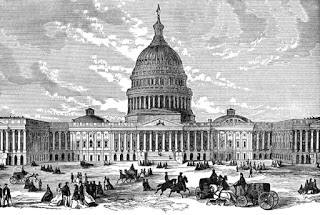
us-capitol-building-1

Particularly distasteful are those politicians who are so careful about their stand on an issue that it is really difficult to find out what they believe. Many of them wait to see how the population sways on an issue – then they will go that way. Whatever happened to integrity? Francis Bacon, Sr. (English lawyer and philosopher 1561-1626) said, “It’s not what we eat but what we digest that makes us strong; not what we gain but what we save that makes us rich; not what we read but what we remember that makes us learned; and not what we profess but what we practice that gives us integrity.”

In the end, of course, only God knows whether what we say matches who we are and what we believe. He does make it clear, however, that He will judge us accordingly.

“For the mouth speaks out of that which fills the heart. The good man brings out of his good treasure what is good; and the evil man brings out of his evil treasure what is evil. But I tell you that every careless word that people speak, they shall give an accounting for it in the day of judgement. For by your words you will be justified, and by your words you will be condemned” (Matthew 12: 34b-37).

From Frazzled to Fruitful

When we lived in California, we had many fruit trees in our yard. Some produced better than others. The lemon tree in our front yard had some really strange looking lemons. We were told it was because we were not giving the tree enough water. Neglect had produced a less than superior product.

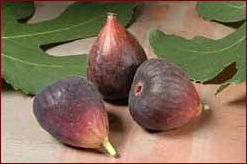
fig_1In our back yard, we had the most prolific fig tree I have ever seen. When we moved into our house, that fig tree was practically a stump because it had been pruned so much. I remember wondering if it would produce any fruit at all. Since it was in an area where we planted grass and watered regularly, that particular tree was not neglected. It produced the most amazingly bountiful crop of figs. Attention to that tree brought the desired results.

It is like that in our spiritual lives. As Christians, those of us who desire to produce fruit in our lives must pay attention to how we are living. The fruit of the Spirit, present in every believer, may lie dormant from neglect, but when the Spirit is allowed to nurture what is already there, there is an obvious difference in productivity.

Life is full of stresses – some good, some bad – but we sometimes allow those stresses to rob us of the joy of the Lord and the peace that comes with knowing Him. Instead we feel frazzled or stressed out.

So often we measure ourselves – or others measure us – by what we do. Our measurement should be God’s standards. Paul gives a list of the elements of the fruit of the Spirit of Christ. That fruit is measured not by what we do, but our character, who we are in Christ. God does desire that we produce tangible fruit, but it is His character that will produce good works, not ours.

How is it possible to keep from being frazzled or completely stressed by cares of life? Act and react in love. An action is something you originate. A reaction is how you respond to other’s actions. When we act and react in His love, God will do through us what we cannot accomplish in our own strength.

Paul describes some elements of a frazzled or stressed lifestyle just before he lists the fruit of the Spirit. Immorality, impurity, sensuality, idolatry, sorcery, enmities, strife, jealousy, outbursts of anger, disputes, dissensions, factions, envying, drunkenness, carousing, etc.  – not one of these deeds of the flesh brings to mind a calm and fruitful person who is trusting in God. They are, in fact, opposites.

Inspired by the Holy Spirit, Paul describes the cure for a frazzled and stressed out lifestyle by his next words.

But the fruit of the Spirit is love, joy, peace, patience, kindness, goodness, faithfulness, gentleness, self-control; against such things there is no law…If we live by the Spirit, let us also walk by the Spirit (Galatians 5:22-23, 25 NAS).

Why We Read

One of my favorite lines in Shadowlands, a movie about C.S. Lewis and Joy Gresham, is: “We read to know we are not alone.”

I’m a writer who loves to read. What I have learned from other people’s writing cannot be measured. Their research and insight have enabled me to answer questions or understand more about something that interests me.

children-reading-6A great day is one where I can sit in a comfy chair with a blanket over my lap, a cup of coffee or tea by my side, and what I call a real book in my hands – the kind with printed pages, maybe some illustrations and sometimes, if it is an old book, a certain smell. Those days are luxurious.

In the last few years, some brick and mortar bookstores have disappeared, largely due to the change in the publishing industry. With electronic readers, laptops and phones that connect to the internet, the business of publishing newspapers, magazines and books will never be the same.

Happily, people are reading more – not less – because of these changes. Although I prefer reading a book in print, I travel so much I seldom carry heavy books with me. Since my husband bought me an e-reader, something to read is always available.
children-reading-5-tnWhile reading someone else’s writing, I get ideas for my own articles, devotionals or books. If I didn’t want someone else to read what I was writing, I would simply keep a private journal, like I used to do. Occasionally, someone will give me feedback about something I wrote and I know that I have connected with my reader. That is gratifying because I write to let others know they are not alone.
It was so important to God we know His love is real that He sent His Son, His living Word, to make that connection between Him and us. His inspired Word, the Bible, lets us know we are not alone.

In the beginning was the Word, and the Word was with God, and the Word was God. He was in the beginning with God….And the Word became flesh, and dwelt among us, and we saw His glory, glory as of the only begotten from the Father, full of grace and truth (John 1:1-2, 14 NAS).

Jesus and Money

When possessions become more important than God or people, your perspective in life is backwards. It is God who gives us all things to enjoy. Without Him, we would have nothing. He puts such a value on us as people that He sent His Son to die in our place.

That’s why, I think, that when Jesus was asked what the greatest commandment is, He replied, “‘You shall love the Lord your God with all your heart, and with all your soul, and with all your mind.” This is the first and great commandment. And the second is like it: ‘You shall love your neighbor as yourself'” (Matthew 22:37-39).

Obeying this commandment enables us to view life the way God intended. Giving Him first place in your life does not rid you of anything. Instead, it enriches you.

Those who are truly rich are those who can love – they can receive love and they can give love.

JESUS AND MONEY

“For you know the grace of our Lord Jesus Christ, that though He was rich, yet for your sakes He became poor, that you through His poverty might become rich” (2 Corinthians 8:9).

Jesus demonstrated how to prioritize.

His choice of earthly status was deliberate. The Son of God chose to be born in a humble stable with a manger for His crib. He did not choose a princess to give Him an earthly body, but a young peasant girl. The man who raised Him as a child was not a lawyer, a teacher or a rich man. He was an ordinary carpenter.

Jesus mingled with both rich and poor. He did not condemn the rich, nor accuse the poor. His teachings, especially the Sermon on the Mount, address attitudes toward money – always emphasizing that a person’s heart will be bound to what he treasures.

The group of twelve disciples that followed Him throughout His ministry came from all walks of life. Most were fishermen. One was a tax collector. Some of their occupations were unknown, but once committed to following Jesus, they left behind their old lives. They lived as their Teacher lived – without dependence on worldly goods.

At one point, Jesus appointed seventy other disciples to go to cities ahead of Him. His instructions were specific. They were to go out two by two carrying no supplies with them. The willingness of those they visited to supply their needs with an open home and shared possessions would be evidence of their reception to the message of the disciples.

Jesus often spoke about material things and money, knowing that was always an issue on the minds of men. Many of His parables were about money, property or wealth.

He wanted to drive home the point that what you do with the material resources you have been given is very important and has consequences.

© Stephanie B. Blake

October 2012

* an excerpt from “Money: How to Be Rich Without It and How to Stretch It Using Ten Hints from the Past and the Technology of Today”

Download Jesus and Money

The Value of a Smile

There are many good poems, songs and stories with a notation “author unknown.” At some point, these artists shared part of themselves but did not think it necessary to leave their signature on their work. I often spend quite a bit of time researching to make sure an anonymous item does not have a name attached to it, but in the following case of the following poem, I found no name. So thanks to the unknown author who brightened my day – and hopefully yours as well.

A Smile

A smile costs nothing, but gives much.
It takes but a moment, but the memory of it sometimes lasts forever.
None is so rich or mighty that he can get along without it.
And none is so poor but that he can be made rich by it.

A smile creates happiness in the home,
fosters good will in business and is the best countersign of friendship.
It brings rest to the weary, cheer to the discouraged, sunshine to the sad,
and it is natures’ best antidote for trouble.
Yet it cannot be bought, begged, borrowed, or stolen,
for it is something that is of no value to anyone until it is given away.

Some people are too tired to give you a smile.
Give them one of yours as none needs a smile so much as he who has no more to give.

405222_4705692559391_1206575027_102736429_732991019_nDSC01573


We touch each other with our smiles. That is the way God made us.

A merry heart makes a cheerful countenance (Proverbs 15:13